This content was generated using artificial intelligence based on publicly available information. It is provided for general informational purposes only and does not constitute legal, tax, immigration, or professional advice. Information may be incomplete or outdated. Always verify with official sources before making decisions.
Data Source: Safety, crime, and quality metrics are sourced from Numbeo, a crowd-sourced global database of reported data.
All scores are relative comparisons on a 0-100 scale, where 50 = global average. Higher scores mean better than average, lower scores mean worse than average.
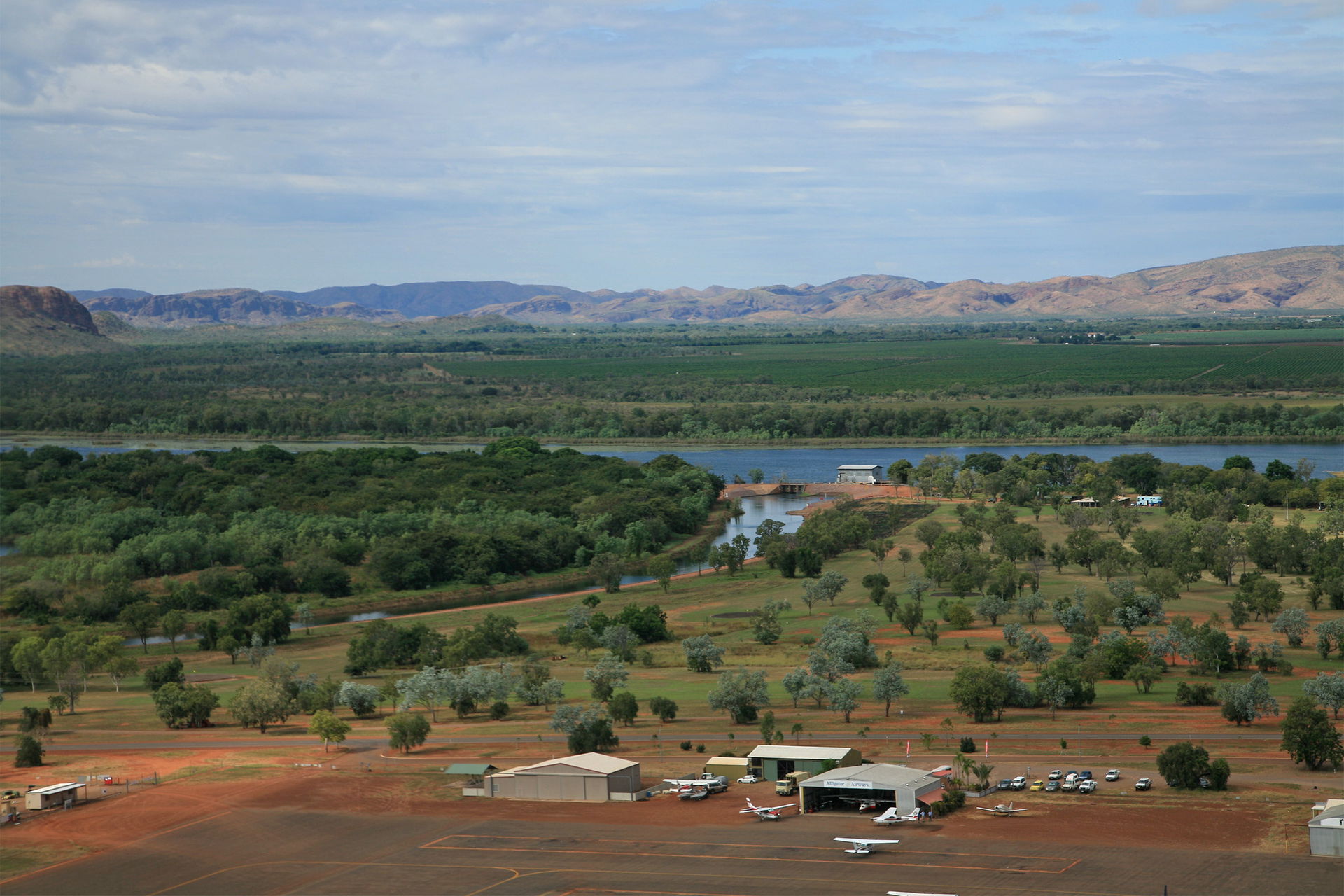
Kununurra offers a distinctive expat experience for those drawn to Australia's remote Kimberley region. It's ideal for professionals and families seeking a close-knit community amidst stunning natural beauty and outdoor adventure, with opportunities often linked to regional industries. Life here promises a unique connection to nature and a slower pace.
While daily living is generally safe and supported by competent local healthcare and transport services, these are tailored to a smaller town. The remote setting fosters a strong sense of community but naturally means fewer urban amenities and international connections than larger cities, requiring an adaptable mindset for a truly immersive Australian experience.
Kununurra has a hot semi-arid climate (Köppen BSh) with a very distinct wet season in the austral summer and a long dry season through winter and spring. Long-term averages show very hot summers, warm winters, and most rainfall concentrated from November to March, with annual rainfall around 800 mm and relatively low average humidity compared with the broader country reference range. The current overcast, very warm, and dry conditions are consistent with the city’s tropical northern location, but seasonal norms remain much drier outside the wet season.
Summer Average
36°C
Winter Average
17°C
Climate Type
Semi-arid
Rainy Days
44
Sunny Days
300
Humidity
37%
Spring
September - November
21-39°C
Spring is very hot and becoming more humid, with temperatures rising quickly toward the build-up before the wet season. Rainfall increases sharply in November compared with the dry months, but sunny conditions still dominate much of the season.
Low rainfall
Summer
December - February
25-36°C
Summer is the wet season, with very high daytime heat and frequent thunderstorms or heavy rain episodes. Most annual rainfall falls in these months, and cloud cover and humidity are much higher than during the dry season.
Very High rainfall
Autumn
March - May
19-35°C
Autumn marks the transition from wet to dry, with March often still humid and rainy before conditions become much drier by May. Temperatures remain hot, but rainfall drops rapidly through the season.
Moderate rainfall
Winter
June - August
15-33°C
Winter is the dry season and the most comfortable time of year, with warm days, cooler nights, and very little rain. Humidity is low, skies are often clear, and rain days are rare.
Very Low rainfall
Loading Weather...
Air Quality
Kununurra
Advantages
Kununurra
Stunning natural landscapes
Close-knit community feel
Abundant outdoor recreation
Tropical climate year-round
Low cost of living
Peaceful, quiet lifestyle
Disadvantages
Kununurra
Extreme geographic isolation
Limited higher education options
Harsh tropical climate conditions
Minimal nightlife and entertainment
Very small job market
Safety & Security in Kununurra
Overall Safety Score
Includes resilience and environmental factors
Moderate
41
/100
Australia Avg
54
Oceania Avg
55
Worldwide Avg
57
Crime & Safety Metrics
Thermometer compares Kununurra to Australia averages using different marker styles.Compare:
Kununurra
Australia Average
Safety Index
0510
Critical
Safety from Crime
0510
Dangerous
Safe Alone (Day)
0510
Moderate
Safe Alone (Night)
0510
Critical
Safety from Violent Crime
0510
Concerning
Safety from Property Crime
0510
Dangerous
Environmental & Natural Hazard Risks
Resilience Score: N/A
Data Currently Under Investigation
Environmental risk assessments are being researched. The indicators below show what data will be available soon.