This content was generated using artificial intelligence based on publicly available information. It is provided for general informational purposes only and does not constitute legal, tax, immigration, or professional advice. Information may be incomplete or outdated. Always verify with official sources before making decisions.
Data Source: Safety, crime, and quality metrics are sourced from Numbeo, a crowd-sourced global database of reported data.
All scores are relative comparisons on a 0-100 scale, where 50 = global average. Higher scores mean better than average, lower scores mean worse than average.
Fort St John presents a compelling option for professionals seeking opportunities in Canada's robust resource sector, particularly oil and gas, alongside an immersive northern lifestyle. It's a gateway to vast outdoor adventures, from hunting to northern lights viewing, appealing to those who embrace a rugged, nature-connected existence.
While healthcare access is reliable and safety generally good, be ready for a distinct northern climate and a smaller-city pace, which means fewer urban amenities than larger centers. This community thrives on its industrious spirit and strong local connections, offering a unique Canadian experience.
Population
20,155
Area
23 km²
Density
882 per km²
Founded
-
Language
English, French
Distance to Coast
946 km
Districts & Neighborhoods in Fort St John, BC
Loading districts…
Climate & Weather in Fort St John, BC
Fort St. John has a subarctic climate (Köppen Dfc), with very cold, snowy winters and short, warm summers. Long-term climate sources show an annual mean temperature near 2-3°C, moderate precipitation around 445-470 mm/year, and humidity in the upper 70% range, while the city’s current light rain and 9.83°C fit a cool, moist shoulder-season pattern.
Summer Average
17°C
Winter Average
-13°C
Climate Type
Subarctic
Rainy Days
66
Sunny Days
120
Humidity
77%
Spring
March - May
-5-15°C
Spring is cool and highly variable, with lingering snow and frequent freeze-thaw cycles in March and April. By May, afternoons often become mild, but nights can still fall near or below freezing.
Moderate rainfall
Summer
June - August
10-21°C
Summer is short but pleasant, with the warmest month usually in July and daytime highs often near 20-21°C. Rainfall is highest in summer, but humidity is lower than in winter and conditions are often comfortable.
Moderate rainfall
Autumn
September - November
-5-15°C
Autumn cools quickly, with mild September days giving way to frosts and occasional early snow by late October or November. Cloudier conditions and increasing precipitation are typical as winter approaches.
Moderate rainfall
Winter
December - February
-20--5°C
Winter is long, very cold, and snowy, with January and February commonly well below freezing. Clear, bright spells can occur, but subzero temperatures and wind chill are frequent.
Low rainfall
Loading Weather...
Air Quality
Fort St John, BC
Loading advantages and disadvantages data, please wait
Advantages
Disadvantages
Safety & Security in Fort St John, BC
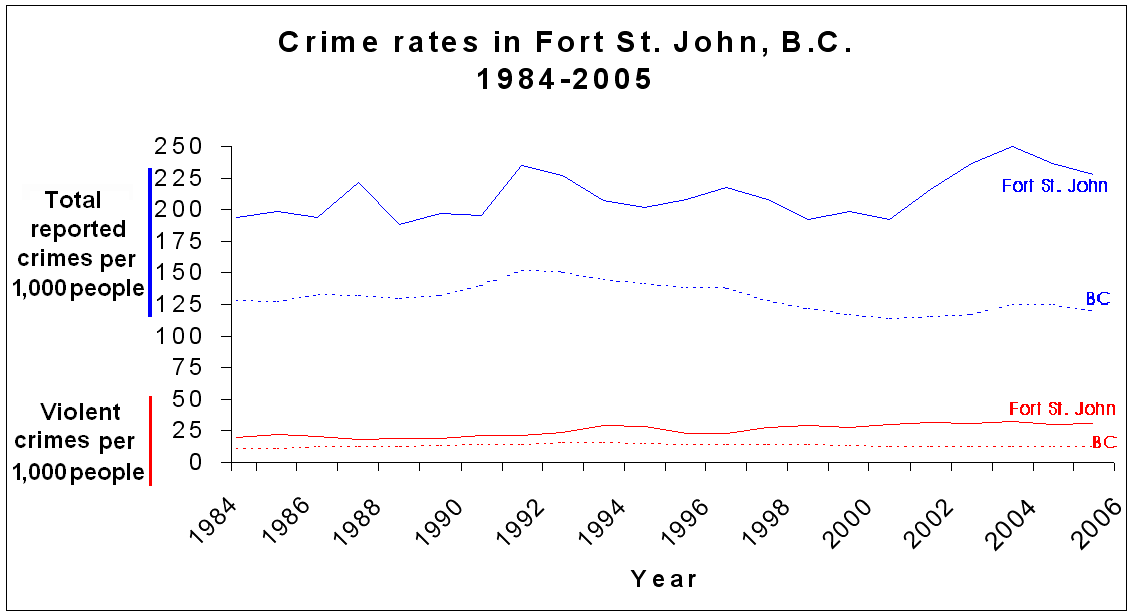
Overall Safety Score
Includes resilience and environmental factors
Moderate
50
/100
Canada Avg
57
North America Avg
57
Worldwide Avg
56
Crime & Safety Metrics
Thermometer compares Fort St John, BC to Canada averages using different marker styles.Compare:
Fort St John, BC
Canada Average
Safety Index
0510
Low
Safety from Crime
0510
Concerning
Safe Alone (Day)
0510
Moderate
Safe Alone (Night)
0510
Low
Safety from Violent Crime
0510
Concerning
Safety from Property Crime
0510
Concerning
Environmental & Natural Hazard Risks
Resilience Score: N/A
Data Currently Under Investigation
Environmental risk assessments are being researched. The indicators below show what data will be available soon.