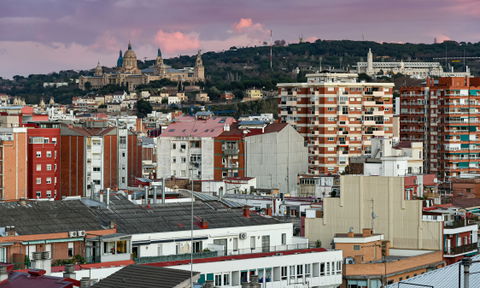
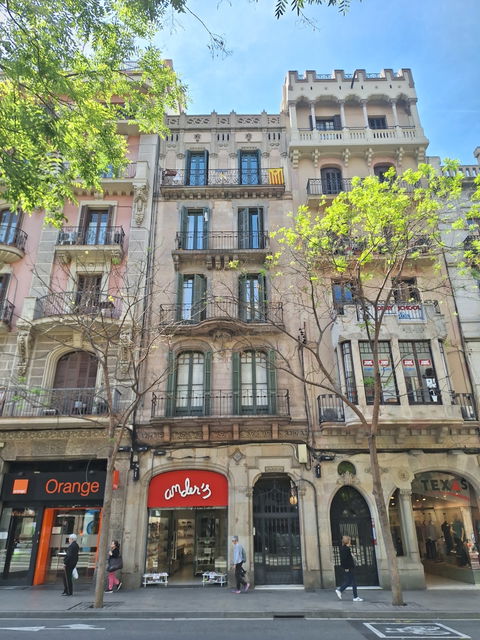
Sants-Montjuïc, designated as District 3, is Barcelona's largest district by area, encompassing 22.37 square kilometers and home to a population of 40,000 residents. It is characterized by a high historic character and high diversity, with a moderate modern character and internationality. The district offers a blend of traditional neighborhoods like Sants and Hostafrancs, known for their village-like feel and the bustling Carrer de Sants shopping street, alongside the significant green lung and cultural hub of Montjuïc Park. While the district generally registers low scores for quietness, nightlife, green space (ranking 8th of 12 city districts), walkability, cycling friendliness, public transport (ranking 11th of 12), school quality, and family friendliness, it provides a substantial array of local facilities.
The district is well-equipped with 179 sports facilities, 84 parks, 65 schools, 220 cafes, 525 restaurants, 313 bars, 13 museums, and 30 theaters. Healthcare needs are met by 27 doctors and 14 hospitals, along with 151 pharmacies and 42 dentists. For connectivity, Sants-Montjuïc benefits from 17 metro stops, 371 bus stops, and 4 train stations, including Barcelona Sants, the city's main railway station, which offers connections to other parts of Barcelona and beyond. Despite a lower overall public transport ranking, residents can easily access the city center via bus, subway, or train, with journeys often taking less than 10 minutes. Air quality in the district is generally favorable, with a lower AQI, PM2.5, PM10, and O3 compared to the city baseline.
Recent developments aim to enhance the district's appeal. A significant urban park project is underway at the former Illa Citroën site in La Bordeta, which will transform an industrial plot into a 22,000-square-meter green space with community areas and new housing, including social apartments. This project also includes improved metro and railway connections. Additionally, new residential developments featuring modern architecture, terraces, swimming pools, gyms, and coworking spaces are emerging, particularly near Montjuïc Park. The average rent for an apartment in Sants-Montjuïc is approximately 25.0 EUR per square meter.
Sants-Montjuïc could appeal to individuals and diverse groups who appreciate a district with a strong historical identity and a multicultural atmosphere. While not ideal for those prioritizing extensive quietness, top-tier schools, or a vibrant nightlife directly within their immediate neighborhood, it offers a rich cultural scene with numerous museums and theaters, along with significant green spaces like Montjuïc Park for recreation. Its robust public transport network, despite its ranking, ensures good connectivity to other parts of Barcelona, making it a practical option for professionals and students. The ongoing urban renewal projects suggest a future with enhanced green spaces and modern living options, potentially attracting those looking for a dynamic area with continuous improvements.
This content was generated using artificial intelligence based on publicly available information. It is provided for general informational purposes only and does not constitute legal, tax, immigration, or professional advice. Information may be incomplete or outdated. Always verify with official sources before making decisions.