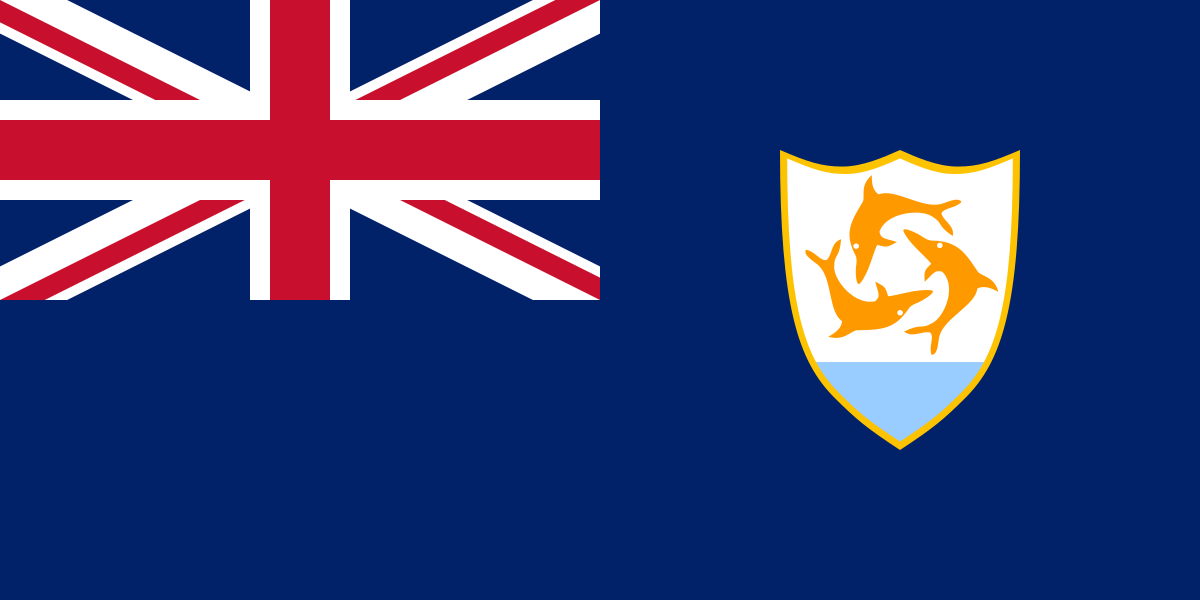
Anguilla flagEnvironment & Sustainability Guide

Air quality, green spaces, and environmental policies in Anguilla

Anguilla, a small Caribbean island territory with a population of 13,452, faces significant environmental challenges including water scarcity, drought vulnerability, and coastal hazard exposure. The island has implemented ecosystem accounting and natural capital management strategies, though comprehensive air quality and recycling data remain limited.

Air Quality Index

Good
7.0/10
Stable trend

Air quality data for Anguilla is limited in public databases. The island's small size and limited industrial activity suggest relatively good baseline air quality, though specific AQI measurements are not regularly published. Coastal location provides natural air circulation benefits.

Water Quality

Moderate
6.5/10

Anguilla faces significant water stress with limited freshwater resources. The island relies heavily on desalination and groundwater extraction, particularly to serve the tourism industry. Water availability and quality are vulnerable to climate change impacts including temperature increases, altered rainfall patterns, and extreme weather events.

Urban population with access to improved drinking water: 99% (2006). Water is supplied through seawater reverse osmosis plants and underground water lens extraction, with uncertain interactions with natural capital.

Recycling System

Anguilla's recycling infrastructure data is not comprehensively documented in public databases. Municipal waste collection covers 100% of the population (2005), with 12,000 tonnes of municipal waste collected annually (2007). Specific recycling rates and available recycling types are not detailed in current environmental statistics.

Green Spaces

Anguilla's natural capital includes diverse terrestrial and marine ecosystems. Forest area covers approximately 55 square kilometers, representing 60.4% of the island's total 91 square kilometers. Ecosystems include tropical-subtropical dry forests, coastal shrublands, seagrass meadows, and salt ponds. These habitats provide critical carbon sequestration (1.68 million XCD/year in ecosystem services value) and coastal hazard protection.

Forest Coverage: 60.4%
Anguilla's natural capital accounts identify key ecosystems including tropical-subtropical dry forests (55.2 million XCD value), coastal shrublands and grasslands (873,474 XCD), seagrass meadows (248,483 XCD), and heritage salt ponds. Coastal habitats provide protection against hazards, avoiding an estimated 96,295.7 square feet of infrastructure damage.

Environmental Policies

Anguilla adopted the National Environmental Management Strategy and Action Plan (NEMS) in 2001, revised in 2005. The government has established infrastructure for integrating renewable energy technologies into the electricity system through the Anguilla National framework. As a UK Overseas Territory, Anguilla is not submitting national communications to the UNFCCC or Nationally Determined Contributions for Paris Agreement implementation.

Key Policies:
  • National Environmental Management Strategy and Action Plan (NEMS) - adopted 2001, revised 2005
  • Anguilla National renewable energy integration infrastructure framework
  • Ecosystem accounting and natural capital management initiatives
Renewable Energy: Anguilla's electricity system generated 88.56 gigawatt-hours (GWh) with peak demand of 13.99 MW and 9.78% transmission and distribution losses (8.57 GWh). The government has developed infrastructure to integrate renewable energy technologies, though specific renewable energy percentage targets are not detailed in available sources.

Natural Disaster Risk

HIGH

Anguilla experiences frequent natural hazards with documented impacts between 1900-2018. The island is vulnerable to hurricanes, droughts, and coastal flooding. Between 1985-2018, multiple natural hazard events affected the population. Impactful droughts occur roughly every 4-5 years during the dry season and every 10-12 years during the wet season, potentially impacting freshwater availability.

Hurricanes and tropical stormsDroughtsCoastal floodingStorm surge
Climate Change Impacts: Climate projections indicate significant water stress increases for Anguilla. Under RCP4.5 scenarios, the Standardized Precipitation Index (SPI-6) is projected to shift from near 0 in the 2020s-2030s to -0.6 in the 2070s-2080s, while SPI-12 shifts from 0 to -1.4, falling into the very dry category. Mean annual rainfall is currently just over 1050 mm, with the wet season spanning May-November. Temperature increases and altered precipitation patterns will reduce water availability and quality, damaging service infrastructure and increasing reliance on desalination. Coastal hazards pose significant risks, with natural ecosystems currently providing protection valued at 96,295.7 square feet of avoided infrastructure damage.

Sustainability Initiatives

Natural Capital Accounting

Anguilla has implemented comprehensive ecosystem and natural capital accounting frameworks to measure environmental assets and services. These accounts quantify carbon sequestration (1.68 million XCD/year), coastal hazard protection, and tourism values. The system enables monitoring of natural capital condition over time and supports evidence-based environmental management decisions.

Renewable Energy Integration

Anguilla's government has established infrastructure to integrate renewable energy technologies into the island's electricity system through the Anguilla National framework. The system currently generates 88.56 GWh annually with peak demand of 13.99 MW. Renewable energy integration aims to reduce dependence on imported fossil fuels and enhance energy security.

Water Resource Management

Anguilla has developed seawater reverse osmosis desalination infrastructure to address water scarcity. The system supplies water to support the tourism industry and domestic consumption. Water resource management strategies address the island's vulnerability to drought cycles occurring every 4-5 years during dry seasons and every 10-12 years during wet seasons.

Wildlife & Nature

Threatened SpeciesVulnerable
Seagrass MeadowsCommon
Tropical-Subtropical Dry ForestsCommon