
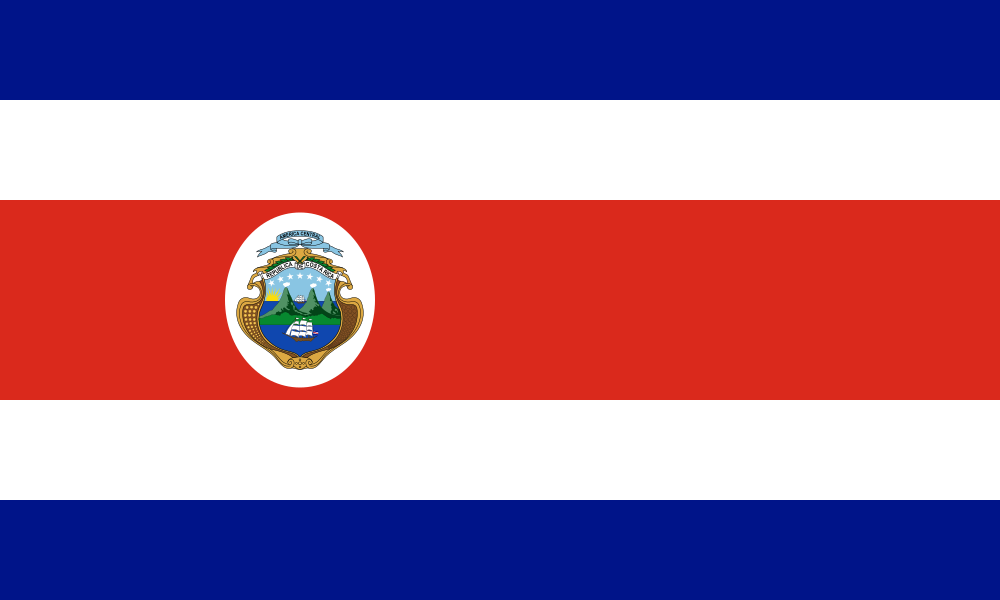
 Politics & Government Guide · Costa Rica
Politics & Government Guide in Costa Rica
Political system, governance structure, stability indicators, and democratic institutions
Costa Rica remains a stable democratic republic under President Rodrigo Chaves Robles since 2022, marked by a fragmented multi-party legislature and executive-legislative tensions. Recent 2026 elections reflect ongoing political shifts from traditional two-party dominance. Challenges include crime, inequality, and governance complexities amid strong institutional checks.
Political Stability
Good
Corruption Index
Moderate
Democracy Index
Good
Government Type
Democratic Republic
Legal System
Civil law system
Head of State
President Rodrigo Chaves Robles(since 2022)
Head of Government
President Rodrigo Chaves Robles(Social Democratic Progress Party)since 2022
Political Indicators
Political Stability
Scale: 0-1
Stable
Political Stability Index (2024)
Corruption Index
Scale: 0-100
Transparency International (2024)
Press Freedom
Scale: 0-100
Reporters Without Borders (2024)
Democracy Index
Scale: 0-10
Full Democracy
Economist Intelligence Unit (2024)
Legislature
Major Political Parties
Right-wing
Centrist
Center-left
Voting Rights
Universal suffrage for citizens aged 18 and older; compulsory voting.
Recent Developments
- General elections held on 2026-02-01 for presidency and Legislative Assembly
- President Rodrigo Chaves confronted checks and balances, intensifying polarization
- Initiatives to combat rising criminal gangs and record murders in 2023
- Road to Education program launched to revitalize education system
More Insights for your Move to Costa Rica
Comprehensive guides and data-driven analysis.
Budget & Expenses
Is your lifestyle affordable? From grocery prices to utility bills, see how costs compare to your home.
Read guideHealthcare
Navigate the healthcare system, insurance options, and medical access as an expat or digital nomad.
Read guideEconomy
Explore the economic landscape, job market trends, income levels, and financial outlook for expats.
Read guide