
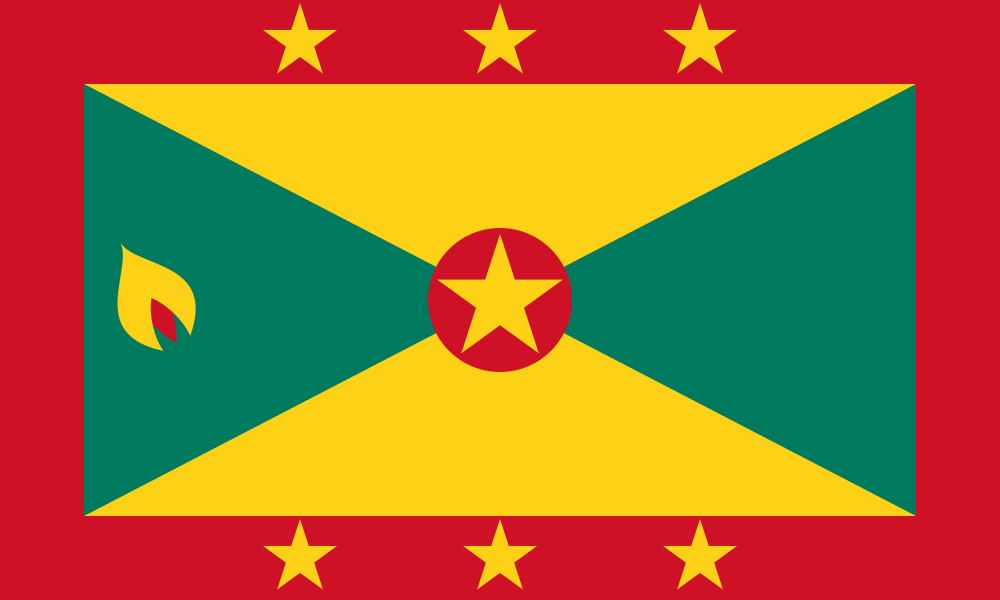
 Social Integration Guide · Grenada
Social Integration Guide in Grenada
Expat communities, cultural integration, and social life
Grenada, a small Caribbean island nation with approximately 112,500 residents, offers a warm and welcoming environment for social integration. With English as the official language and a predominantly Christian population, newcomers find a tight-knit community culture centered on family, faith, and local traditions. The island's compact size facilitates personal connections, though expat communities remain relatively small compared to larger Caribbean destinations.
Cultural Integration Score
Grenada offers moderate cultural integration with significant advantages: English is the official language, eliminating major communication barriers. The island's small size and tight-knit community culture facilitate personal connections quickly. However, integration requires patience as locals maintain strong traditional values and family-centered social structures. Newcomers who engage with church communities and local events experience faster acceptance.
Expat Community
The expat community in Grenada is small but growing, with populations primarily from North America, Europe, and other Caribbean nations. Expats report a welcoming environment, though the limited expat infrastructure means less formal support networks compared to larger Caribbean destinations. Most expats settle in St. George's or coastal areas. The community is dispersed rather than concentrated, requiring proactive effort to connect with other foreigners. Long-term expats often become deeply integrated into local communities, while short-term residents may feel isolated without intentional networking.
- St. George's
- Grand Anse
- Morne Rouge
Social Activities
Expats in Grenada engage in outdoor activities leveraging the island's natural beauty—beaches, hiking, water sports. Social connection often happens through informal gatherings at restaurants and bars, particularly in St. George's. Expats organize occasional dinner clubs and social events, though these are less frequent than in larger expat communities. Participation in local Carnival and festivals provides cultural immersion. Many expats find community through volunteer work and church attendance. The small expat population means social circles often overlap with local communities.
- Beach and water sports activities
- Hiking and nature exploration
- Expat dinner clubs and social gatherings
- Carnival celebrations and festivals
- Sailing and boating excursions
- Yoga and wellness classes
- Restaurant and bar socializing
- Volunteer community service projects
Religious Facilities
Expats report good access to religious facilities in Grenada. Protestant and Catholic churches welcome international visitors and expats. English-language services are standard. Many expats find church communities to be primary social integration points, offering both spiritual connection and community belonging. Smaller faith communities (Hindu, Muslim, Jewish) have limited but growing presence; expats of these faiths may need to travel or connect virtually. Church attendance is viewed positively by locals and facilitates integration.
- Protestant churches
- Roman Catholic churches
- Pentecostal congregations
- Seventh Day Adventist churches
- Interfaith and ecumenical groups
Volunteer Opportunities
Expats report meaningful volunteer opportunities in Grenada, particularly through environmental conservation, education, and community development organizations. Volunteering is cited as an effective integration strategy, providing purpose and local connections. Environmental groups welcome expat participation in beach cleanups and conservation projects. Educational institutions seek volunteer tutors and mentors. Healthcare and social service organizations utilize expat skills. Formal volunteer coordination is less developed than in larger countries, requiring initiative to identify opportunities. Volunteering significantly enhances expat sense of belonging.
- Environmental conservation and marine protection
- Education and youth mentoring
- Healthcare and medical outreach
- Disaster preparedness and relief
- Community development projects
- Animal welfare and rescue
Dating & Relationships
Expats report that dating in Grenada requires cultural adjustment. The small population limits dating pool significantly. Online dating apps have limited user bases. Expats often meet partners through social circles, work, or volunteer activities. International relationships are increasingly accepted, particularly in tourist areas and among younger Grenadians. Expats note that locals may have traditional expectations around relationships and commitment. Long-term expat couples often find strong community support. Dating as a casual activity is less common; relationships are expected to progress toward commitment.
Cultural Note: Be respectful of traditional values around relationships and family. Introduce partners to your social circle early. Avoid public displays of affection in conservative areas. Understand that family approval matters significantly to local partners. Be prepared for slower relationship progression and higher commitment expectations than in Western dating cultures.
Professional Networking
Professional networking for expats in Grenada is challenging due to the small business community and limited formal networking events. However, opportunities exist in tourism, real estate, and entrepreneurship sectors. Many expats work remotely or run their own businesses, creating informal digital nomad networks. The Chamber of Commerce provides some business connections. Networking is highly relationship-based; personal introductions are essential. LinkedIn activity is growing but remains limited. Expats report that success requires patience and relationship-building over time. International organizations and NGOs offer networking opportunities.
- Tourism and hospitality industry networks
- Entrepreneurship and small business groups
- Remote work and digital nomad communities
- Real estate and property development circles
- Educational and training institutions
- Government and international organization contacts
More Insights for your Move to Grenada
Comprehensive guides and data-driven analysis.
Budget & Expenses
Is your lifestyle affordable? From grocery prices to utility bills, see how costs compare to your home.
Read guideEnvironment & Health
Is it healthy to live here? Check air quality, green spaces, and sustainability policies.
Read guidePolitics & Governance
Understand the political system, stability indicators, and democratic institutions that shape daily life.
Read guide