
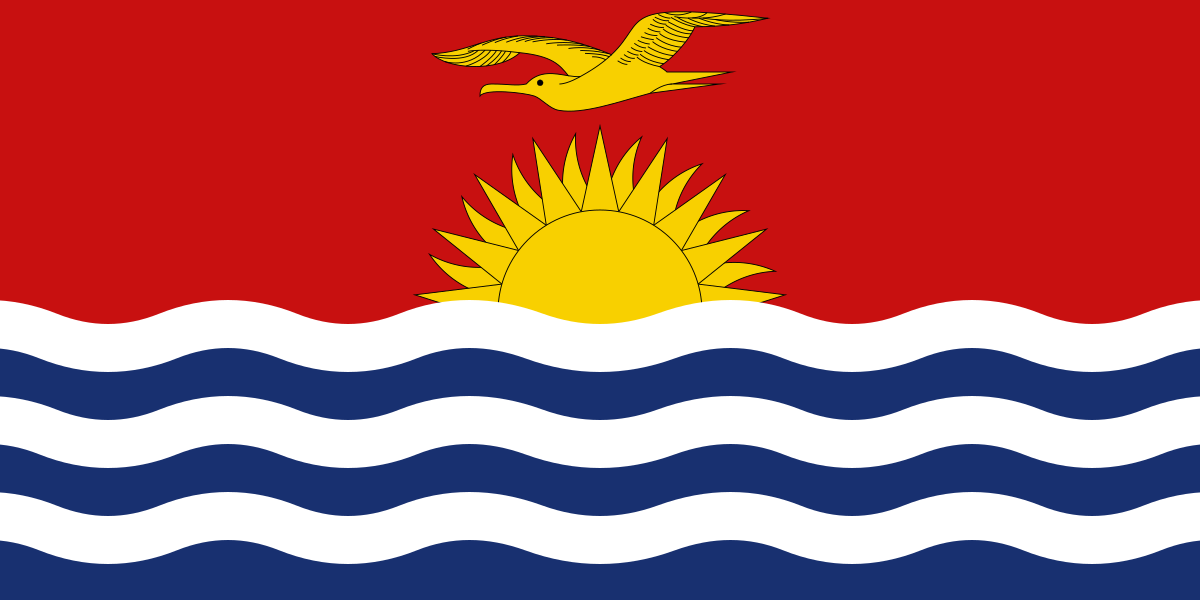
 Economía · Kiribati
Economía en Kiribati
Panorama económico, tendencias del mercado laboral, niveles de ingresos y contexto financiero para expatriados
GDP
$227.610.035
Producción económica total del país
HDI
0.62
Desarrollo humano medio
Calidad de vida
N/A
Puntuación compuesta basada en coste de vida, seguridad, sanidad y clima
Poder adquisitivo
N/A
Cuánto puede comprar tu salario después de los gastos de vida
Índice de coste de vida
El Índice Exacto del Costo de Vida no está disponible. Se estima que es moderado (alrededor de 50.0) en comparación con la línea base de Nueva York. El alquiler (19.9) y los precios de los restaurantes (33.7) son relativamente bajos, mientras que los comestibles (79.3) son más caros.
Mercado inmobiliario
La relación entre el precio de la propiedad y los ingresos es muy alta, de 55.2 años, lo que indica un mercado inmobiliario muy caro. El índice de alquiler es significativamente más bajo, de 19.9, lo que sugiere que alquilar es más asequible que comprar.
Niveles de ingresos medios
El índice de poder adquisitivo no está disponible. Se estima que es bajo, lo que refleja el estatus de Kiribati como un pequeño estado insular en desarrollo con una economía dominada por el sector público y dependencia de la ayuda exterior y las remesas.
Sistema fiscal
Kiribati tiene un sistema de impuesto sobre la renta progresivo con un umbral exento de impuestos de 6,500 AUD. Las tasas varían del 25% al 35% para ingresos más altos. Existe un Impuesto al Valor Agregado (IVA), pero las tasas estándar específicas no estaban fácilmente disponibles. La tributación de la propiedad es muy limitada debido a la propiedad consuetudinaria de la tierra, aunque existe un impuesto del 2% sobre el Valor de Alquiler Anual para algunas propiedades.
Entorno empresarial
El entorno empresarial de Kiribati es desafiante, ocupando el puesto 164 de 190 economías en el índice de Facilidad para Hacer Negocios de 2019. La economía se considera 'en su mayoría no libre' (Índice de Libertad Económica de 2026), caracterizada por un sector público dominante, regulaciones comerciales rudimentarias e inconsistentes, y una falta de dinamismo en el sector privado.
Seguridad Social
Kiribati tiene un sistema de seguridad social con contribuciones obligatorias del 7.5% de empleados y empleadores al Fondo de Previsión de Kiribati. Ofrece una pensión de vejez no contributiva para ciudadanos mayores de 67 años (50-60 AUD/mes) y un Fondo de Apoyo para Desempleados ampliamente accesible, lo que indica una red de seguridad social relativamente sólida.
Seguridad bancaria y financiera
Kiribati no tiene un banco central y utiliza el dólar australiano. La Autoridad Supervisora Financiera de Kiribati existe pero aún no está completamente operativa, y no existe un esquema explícito de seguro de depósitos nacional, lo que significa que los depósitos no están protegidos por una garantía respaldada por el gobierno. El sector bancario es limitado, con un banco comercial y dos instituciones financieras públicas.
Protección de depósitos: hasta $0 USD (ver fuentes)Más información para tu mudanza a Kiribati
Guías completas y análisis basados en datos.
Presupuesto y gastos
¿Es asequible tu estilo de vida? Desde precios de supermercado hasta facturas de servicios, ve cómo se comparan los costes.
Leer guíaCarrera y economía
¿Buscas empleo o quieres montar una empresa? Descubre el mercado laboral local y las oportunidades de negocio.
Leer guíaColegios y familia
Encontrar el colegio adecuado es una prioridad. Compara colegios internacionales y estándares curriculares.
Leer guía