
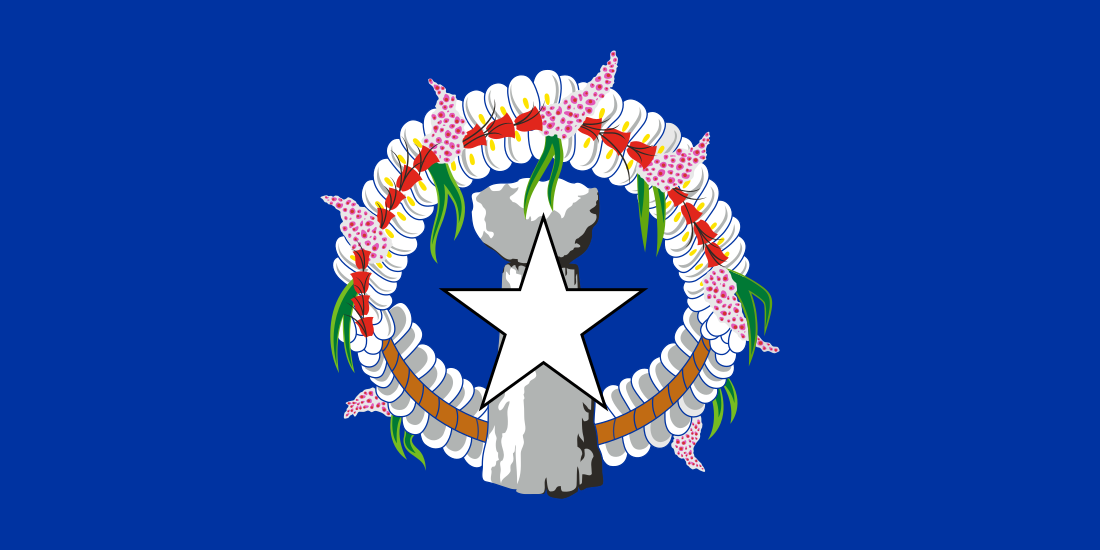
 Environnement et santé · Northern Mariana Islands
Environnement et santé en Northern Mariana Islands
Qualité de l'air, espaces verts et politiques de durabilité
Indice de qualité de l'air
La qualité de l'air dans les îles Mariannes du Nord est généralement bonne en raison de leur emplacement isolé dans le Pacifique et de l'activité industrielle limitée. Cependant, des variations saisonnières se produisent avec des transports occasionnels de poussière d'Asie et des émissions provenant d'un trafic automobile limité et d'installations de production d'énergie.
Qualité de l'eau
La qualité de l'eau dans les îles Mariannes du Nord est affectée par des ressources en eau douce limitées, la dégradation des récifs coralliens et la pollution marine. L'intrusion d'eau salée menace les réserves d'eau souterraine, tandis que l'acidification et le réchauffement des océans ont un impact sur la qualité de l'eau marine et la santé des écosystèmes.
Système de recyclage
Les îles Mariannes du Nord disposent d'une infrastructure de recyclage formelle limitée. Les défis de la gestion des déchets comprennent une capacité d'enfouissement limitée, des coûts élevés de transport des déchets et le recours à des pratiques de recyclage informelles. Le territoire s'efforce d'améliorer les programmes de réduction des déchets et de recyclage.
Espaces verts
Les îles Mariannes du Nord abritent divers écosystèmes, notamment des forêts tropicales, des récifs coralliens et des aires marines protégées. Environ 24,5 % de la couverture forestière subsiste, bien que la déforestation et les espèces envahissantes constituent des menaces continues. Les aires marines protégées sont essentielles pour la conservation de la biodiversité.
Politiques environnementales
Les îles Mariannes du Nord ont adopté des politiques environnementales abordant le changement climatique, la conservation marine et le développement durable. En tant que territoire américain, elles suivent les normes environnementales fédérales tout en développant des stratégies locales d'adaptation climatique et des initiatives en matière d'énergies renouvelables.
- •Stratégie d'adaptation au changement climatique
- •Extension des aires marines protégées
- •Plan de développement des énergies renouvelables
- •Programme de gestion des espèces envahissantes
- •Conformité à la loi sur la gestion des zones côtières
Risque de catastrophe naturelle
ÉLEVÉLes îles Mariannes du Nord sont confrontées à un risque extrême de catastrophes naturelles (typhons, tremblements de terre et tsunamis) en raison de leur emplacement dans la ceinture de typhons du Pacifique occidental et de leur proximité avec la zone de subduction de la fosse des Mariannes. L'élévation du niveau de la mer aggrave la vulnérabilité.
Initiatives de durabilité
Les îles Mariannes du Nord développent des projets d'énergie solaire et éolienne pour réduire leur dépendance aux combustibles fossiles importés. Le financement fédéral du Département de l'Énergie des États-Unis soutient le développement des infrastructures d'énergies renouvelables et la modernisation du réseau.
Le monument national marin de la fosse des Mariannes et la zone de gestion marine de Managaha protègent des écosystèmes marins essentiels. L'expansion des aires marines protégées vise à préserver les récifs coralliens, les stocks de poissons et la biodiversité menacés par le changement climatique et la surpêche.
Les îles Mariannes du Nord mettent en œuvre des stratégies d'adaptation climatique, notamment la protection côtière, l'amélioration de la sécurité en eau douce et des programmes de préparation aux catastrophes. Des initiatives d'adaptation basées sur la communauté abordent les vulnérabilités locales à l'élévation du niveau de la mer et aux phénomènes météorologiques extrêmes.
Des programmes ciblent les espèces envahissantes menaçant les écosystèmes indigènes, notamment les serpents bruns des arbres, les plantes envahissantes et les espèces aquatiques. Les efforts de gestion protègent l'habitat forestier restant et la productivité agricole.
Faune et nature
Plus d'informations pour votre déménagement à Northern Mariana Islands
Guides complets et analyses basées sur les données.
Budget et dépenses
Votre style de vie est-il abordable ? Des prix des courses aux factures, voyez comment les coûts se comparent à votre pays d'origine.
Lire le guideServices d'urgence
Numéros d'urgence, systèmes hospitaliers, temps de réponse et que faire en cas de crise à l'étranger.
Lire le guideClimat et saisons
Comprenez les modèles météorologiques, les températures saisonnières et les meilleures périodes pour les expatriés et les nomades numériques.
Lire le guide