
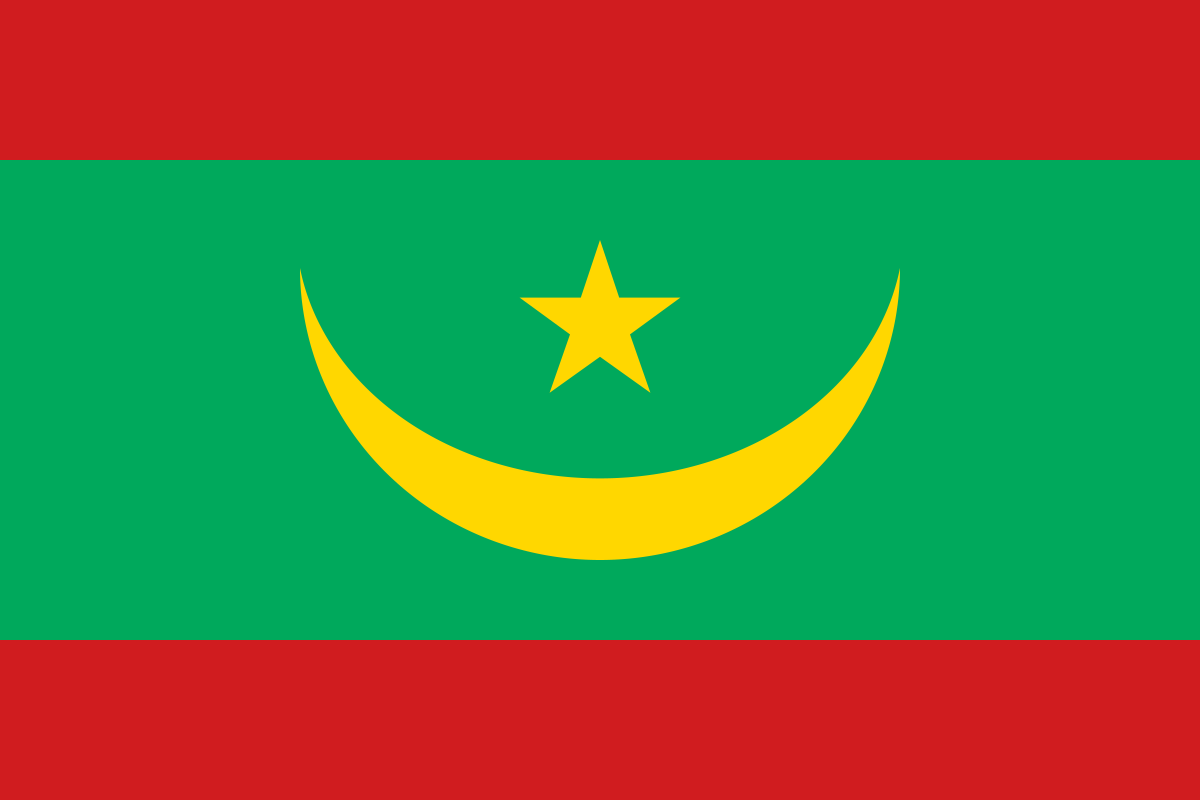
 Long-term Expat Guide · Mauritania
Long-term Expat Guide in Mauritania
Visa & residency pathways, tax obligations, and healthcare access for long-term expats
Long-term Expat Guide for Mauritania
Relocating to Mauritania requires a thorough understanding of its immigration policies. The Direction Générale de la Sûreté Nationale (DGSN) is the primary authority for immigration matters.
-
Visa-free entry and tourist stay limits:
- Currently, Mauritania does not offer widespread visa-free entry for major passport holders from the EU, US, or UK. Most foreign nationals require a visa to enter Mauritania, even for tourism. Exceptions are generally limited to citizens of certain African countries. It is crucial to check the latest requirements with the nearest Mauritanian embassy or consulate before travel.
- Tourist visas typically allow stays of up to 30 or 90 days, depending on the visa type and nationality, and are usually single-entry.
-
Temporary residency tracks (work, study, family, investment):
- Work Visas/Permits: Foreigners intending to work in Mauritania must first secure a job offer from a Mauritanian employer. The employer typically initiates the work permit application process with the Ministry of Public Service, Labour, and Employment. Once approved, the individual can apply for a long-stay visa (visa de long séjour) at a Mauritanian embassy abroad, which will then be converted into a residency permit upon arrival and registration with the DGSN. Work permits are usually valid for one year and are renewable.
- Study Visas: Students admitted to a recognized educational institution in Mauritania can apply for a student visa. This requires proof of admission, financial means, and often a letter of acceptance from the institution. Student visas are typically valid for the duration of the study program and require annual renewal.
- Family Visas: Spouses and dependent children of individuals holding valid work or residency permits in Mauritania can apply for family reunion visas. Documentation typically includes marriage certificates, birth certificates, and proof of the primary applicant's residency status and financial capacity.
- Investment Visas: While Mauritania encourages foreign investment, there isn't a clearly defined 'investment visa' program akin to those in some other countries. Investors typically enter on a business visa and then apply for a long-term residency permit based on their business registration and investment activities. This process often involves engagement with the Agence de Promotion des Investissements en Mauritanie (APIM).
-
Permanent residency:
- Eligibility for permanent residency is generally granted after several years of continuous legal temporary residency (e.g., 5-10 years) under a valid purpose (work, investment). The process is highly discretionary and requires demonstrating stable employment, financial self-sufficiency, good conduct, and integration into Mauritanian society. Specific timelines and detailed requirements are not publicly standardized and often handled on a case-by-case basis by the DGSN.
-
Citizenship:
- Mauritanian citizenship can be acquired through birth (Jus Sanguinis, with some Jus Soli elements), marriage, or naturalization.
- Naturalization: Generally, a foreigner must have resided legally in Mauritania for a significant period, typically at least 10 years, demonstrate good character, and show integration. The process is complex, lengthy, and requires approval from the Ministry of Justice. Dual citizenship is generally not recognized by Mauritanian law, meaning applicants may be required to renounce their original citizenship.
-
Work permits and employment authorisation for foreigners:
- A work permit is mandatory for all foreigners seeking employment in Mauritania. The employer is responsible for applying for the work permit on behalf of the foreign employee. This involves demonstrating that no qualified Mauritanian national is available for the position. Once the work permit is issued by the Ministry of Public Service, Labour, and Employment, the individual can then apply for a long-stay visa and subsequent residency permit.
-
Digital nomad or remote worker visa programmes:
- As of May 2026, Mauritania does not have a specific digital nomad or remote worker visa program. Foreigners wishing to reside and work remotely from Mauritania would typically need to explore options such as a business visa (if they are self-employed or running a foreign business) or a standard long-stay visa, which may not explicitly cover remote work. It is advisable to consult with a Mauritanian embassy or legal expert for the most appropriate visa category, as working without proper authorization can lead to penalties.
-
Student visas:
- As mentioned above, student visas are available for those accepted into Mauritanian educational institutions. Key documents include a letter of acceptance, proof of financial support (e.g., bank statements, scholarship letters), academic transcripts, and a valid passport. These are typically processed through Mauritanian embassies or consulates.
-
Family reunion and dependent visas:
- These visas allow family members (spouses, minor children) of a primary visa holder (e.g., worker, investor) to join them in Mauritania. Required documents include authenticated marriage and birth certificates, the primary applicant's valid residency permit, and proof of sufficient financial resources to support the dependents.
-
Application process: where to apply, documentation, fees, timelines:
- Where to apply: Most initial visa applications are made at Mauritanian embassies or consulates in the applicant's country of origin or legal residence. For residency permits and renewals, applications are submitted to the Direction Générale de la Sûreté Nationale (DGSN) in Mauritania.
- Documentation: Common requirements include a valid passport (with at least six months validity), passport-sized photos, a completed application form, invitation letters (for business/work), acceptance letters (for study), marriage/birth certificates (for family reunion), proof of financial means, and a clean criminal record certificate. All foreign documents must typically be translated into Arabic or French and legalized.
- Fees: Visa fees vary significantly by nationality and visa type, typically ranging from €50-€200 (approx. MRU 2,000-8,000) for short-stay visas, and higher for long-stay and residency permits. These fees are subject to change and should be confirmed with the relevant embassy or DGSN. (Costs as of May 2026).
- Timelines: Processing times can vary widely, from a few days for tourist visas to several weeks or months for work permits and residency applications. It is advisable to apply well in advance of your intended travel date.
-
Renewal procedures:
- Temporary residency permits are generally issued for one year and must be renewed annually at the DGSN. The renewal process requires updated documentation, proof of continued eligibility (e.g., employment contract, student enrollment), and payment of renewal fees. It's crucial to initiate the renewal process before the current permit expires to avoid penalties or overstaying.
-
Common pitfalls and refusal reasons:
- Incomplete or incorrect documentation: This is the most frequent reason for refusal. Ensure all forms are filled accurately and all required documents are provided and properly authenticated.
- Lack of sufficient funds: Applicants must demonstrate adequate financial means to support themselves and their dependents.
- Criminal record: A history of criminal activity will likely lead to visa refusal.
- Overstaying previous visas: Prior immigration violations in Mauritania or other countries can negatively impact future applications.
- Failure to meet specific visa category requirements: Not genuinely qualifying for the visa type applied for (e.g., applying for a business visa without a legitimate business purpose).
- Security concerns: Any perceived security risk can lead to refusal.
Understanding Mauritania's tax system is crucial for expats to ensure compliance. The Direction Générale des Impôts (DGI) is the primary tax authority.
-
Tax residency rules: when a foreigner becomes a tax resident:
- An individual is generally considered a tax resident in Mauritania if they have their primary residence or habitual abode in Mauritania, or if they are present in Mauritania for more than 183 days within any 12-month period. Tax residency determines the scope of an individual's tax liability.
-
Income tax rates and brackets for residents vs non-residents:
- Residents: Mauritanian tax residents are taxed on their worldwide income. The income tax system is progressive. While specific brackets can change, as of May 2026, personal income tax (Impôt sur les Traitements et Salaires - ITS) rates typically range from 0% to 25% or higher for the highest earners. There's often a tax-free threshold.
- Non-residents: Non-residents are generally taxed only on income sourced within Mauritania. This often involves a flat withholding tax rate on certain types of income (e.g., professional fees, royalties) paid to non-residents, which can be around 15-20%.
- It is highly recommended to consult the latest tax laws or a local tax advisor for precise current rates and brackets.
-
Double taxation treaties: list key countries with active treaties:
- Mauritania has a limited number of double taxation treaties (DTTs) to prevent individuals and companies from being taxed twice on the same income. Key countries with active DTTs or agreements with Mauritania include:
- France
- Tunisia
- Morocco
- Kuwait
- These treaties typically cover income tax and aim to reduce the tax burden on expats from these countries working in Mauritania, or Mauritanians working in these countries. The specific provisions of each treaty vary.
- Mauritania has a limited number of double taxation treaties (DTTs) to prevent individuals and companies from being taxed twice on the same income. Key countries with active DTTs or agreements with Mauritania include:
-
Social security and pension contributions for foreigners:
- Foreign employees working in Mauritania are generally required to contribute to the national social security system, managed by the Caisse Nationale de Sécurité Sociale (CNSS). Contributions cover old-age pensions, disability, and survivor benefits, as well as family allowances and occupational accident/illness insurance.
- Employee contributions: Typically a percentage of gross salary (e.g., 1% for pension, plus other small contributions).
- Employer contributions: A higher percentage of the employee's gross salary (e.g., 15-16% covering various benefits).
- Expats from countries with a social security agreement with Mauritania might be exempt from contributions or have their contributions recognized in their home country. However, such agreements are rare.
-
Tax filing requirements, deadlines, and how to file:
- Requirements: All tax residents and non-residents with Mauritanian-sourced income are generally required to file an annual income tax return. Employers are responsible for withholding income tax (ITS) from employee salaries and remitting it to the DGI.
- Deadlines: The tax year in Mauritania is the calendar year (January 1 to December 31). Annual income tax returns are typically due by March 31st of the following year.
- How to file: Tax returns are filed with the DGI. While some larger companies may have electronic filing capabilities, individual expats often file paper returns directly at the DGI offices or through a local tax advisor.
-
Tax deductions and allowances available to expats:
- Deductions and allowances can include certain professional expenses, family allowances (for dependents), and contributions to approved pension schemes. The specific details and limits are defined in the Mauritanian tax code. It's advisable to seek professional advice to understand applicable deductions.
-
Property ownership tax for foreigners:
- Foreigners can generally own property in Mauritania. Property owners are subject to property taxes, including a land tax (Impôt Foncier) and a building tax (Taxe sur les Propriétés Bâties). These taxes are levied annually by local municipalities based on the cadastral value of the property.
- When purchasing property, there are also registration fees and transfer taxes, which can be a significant percentage of the property value (e.g., 3-5%).
-
Capital gains tax:
- Capital gains arising from the sale of real estate or shares are generally subject to capital gains tax in Mauritania. The rates can vary depending on the asset type and whether the seller is an individual or a company. For individuals, capital gains are often integrated into the general income tax calculation or taxed at a specific flat rate.
-
VAT and other indirect taxes affecting daily life:
- Value Added Tax (VAT): Mauritania levies VAT (Taxe sur la Valeur Ajoutée - TVA) on most goods and services. The standard VAT rate is currently 16% (as of May 2026). Reduced rates may apply to certain essential goods and services, and some items may be exempt.
- Other indirect taxes: These include customs duties on imported goods, excise duties on specific products (e.g., tobacco, alcohol, petroleum products), and various local taxes and fees.
-
Wealth or net worth taxes if applicable:
- As of May 2026, Mauritania does not generally impose a specific wealth or net worth tax on individuals.
-
When to engage a local tax advisor:
- It is highly recommended to engage a local tax advisor or accountant, especially upon arrival and before making any significant financial decisions (e.g., starting a business, purchasing property). Mauritanian tax law can be complex, and a local expert can provide tailored advice, ensure compliance, and help optimize your tax situation, particularly concerning residency status, double taxation treaties, and specific deductions.
-
Penalties for non-compliance:
- Non-compliance with tax obligations can result in significant penalties, including fines, interest on unpaid taxes, and in severe cases, legal prosecution. Penalties for late filing or underpayment are typically calculated as a percentage of the unpaid tax, increasing with the duration of non-compliance.
Mauritania's healthcare system is developing, with significant disparities between urban and rural areas. Expats generally rely on private facilities and robust health insurance.
-
Healthcare system overview: public vs private, how it is funded:
- Mauritania operates a two-tiered healthcare system: a public sector and a smaller, but growing, private sector.
- Public Healthcare: Funded primarily by the government and international aid, the public system includes national hospitals (like the National Hospital in Nouakchott), regional hospitals, and local health centers. Services are generally low-cost or free for citizens, but quality can be inconsistent, with shortages of equipment, medications, and specialized personnel.
- Private Healthcare: Concentrated mainly in Nouakchott and Nouadhibou, the private sector consists of clinics, private hospitals, and specialized practices. These facilities offer a higher standard of care, better equipment, and more readily available medications, but at a significantly higher cost.
-
Access rights for foreigners (tourists vs residents vs workers):
- Tourists: Tourists typically have access to emergency services and can seek care at public or private facilities, but they are expected to pay for all services out-of-pocket or through travel insurance.
- Residents and Workers: Foreign residents and workers, especially those contributing to the CNSS (Caisse Nationale de Sécurité Sociale), may have some limited access to public health services, particularly for occupational health and family benefits. However, the coverage is often basic, and most expats opt for private care. Full access to the public system as a Mauritanian citizen is not typically granted.
-
Health insurance: what is required, what public coverage covers:
- Required: While not always legally mandated for visa applications, comprehensive private health insurance is highly recommended and practically essential for all foreigners in Mauritania. The public system's coverage for expats is minimal and unreliable for serious conditions.
- Public Coverage: For those contributing to the CNSS, benefits primarily cover workplace accidents, occupational diseases, and some family allowances. It does not provide comprehensive medical care for general illnesses or hospitalizations in the way a national health service might in Western countries.
-
How to register with the public healthcare system as a foreigner:
- Foreign employees whose employers contribute to the CNSS are automatically registered for social security benefits, which include some health-related coverage (e.g., for work-related injuries). There isn't a direct 'registration' for comprehensive public healthcare access for expats in the same way citizens might register. For general medical needs, expats rely on private insurance and facilities.
-
Private health insurance: recommended providers, typical costs:
- Recommended Providers: International health insurance providers with global coverage are strongly recommended. Reputable options include Cigna Global, Allianz Care, Bupa Global, Aetna International, and AXA PPP International. Some local private clinics may also offer their own limited insurance plans or direct billing arrangements.
- Typical Costs: The cost of private international health insurance varies widely based on age, coverage level, and chosen provider. For a comprehensive plan, expats can expect to pay anywhere from $200 - $600+ (approx. MRU 8,000 - 24,000+) per month for an individual, as of May 2026. Plans covering medical evacuation are crucial due to limited advanced medical facilities in Mauritania.
-
Quality of public vs private care in practice:
- Public Care: Generally considered basic. Facilities often lack modern equipment, have limited specialist availability, and may suffer from hygiene issues. For anything beyond routine or minor ailments, public hospitals are often insufficient.
- Private Care: Offers a significantly higher standard. Private clinics and hospitals in Nouakchott are better equipped, have more qualified staff (including foreign-trained doctors), and provide a cleaner, more efficient environment. However, even the best private facilities may not handle highly complex or specialized medical procedures, often necessitating medical evacuation.
-
Emergency services: how to access, what to expect:
- Access: Emergency services are limited. The national emergency number is 117 for police, but there isn't a unified, reliable ambulance service like in many Western countries. For medical emergencies, it's often quicker to go directly to the nearest private clinic or hospital via private vehicle or taxi.
- What to expect: Public emergency rooms can be overcrowded and under-resourced. Private clinics offer faster response and better care, but immediate payment or proof of insurance is usually required. For severe emergencies, especially those requiring specialized care, medical evacuation to a neighboring country (e.g., Morocco, Senegal) or Europe is often the only viable option.
-
Prescription medications: availability, cost, how to obtain:
- Availability: Basic medications are generally available in pharmacies in major cities. However, specialized or less common drugs may be difficult to find. It's advisable to bring a supply of any critical prescription medications, along with a doctor's note.
- Cost: Medications can be expensive, especially imported ones. Costs vary but are often comparable to or higher than in Western countries for certain brands. (e.g., a common antibiotic might cost MRU 500-2000 / $12-50, as of May 2026).
- How to obtain: A prescription from a local doctor is usually required for most prescription drugs. Pharmacists may sometimes dispense certain medications without a prescription, but this is not guaranteed.
-
Dental and vision care: public coverage vs out-of-pocket:
- Public Coverage: Public dental and vision care is virtually non-existent for expats. Any coverage through CNSS would be extremely limited.
- Out-of-Pocket: Expats will need to pay out-of-pocket for all dental and vision services. Private dental clinics are available in Nouakchott and offer a range of services, but quality can vary. Opticians are also present in major cities. Costs are generally high, and comprehensive international health insurance with dental/vision riders is recommended.
-
Mental health services available to expats:
- Mental health services are very limited in Mauritania. There are few qualified psychiatrists or psychologists, and culturally, mental health issues may carry a stigma. Expats requiring mental health support often rely on remote tele-health services from providers in their home country or seek care during visits abroad. Some private clinics in Nouakchott may have general practitioners who can offer initial support or referrals, but specialized care is rare.
-
Maternity care and childbirth options:
- Maternity care is available in both public and private hospitals. Public facilities offer basic care, but private clinics and hospitals in Nouakchott are preferred by expats due to better hygiene, more experienced staff, and improved facilities. However, for high-risk pregnancies or complicated deliveries, medical evacuation might be considered due to limited advanced neonatal care. Costs for private childbirth can range from MRU 50,000 - 150,000+ ($1,250 - 3,750+) for a standard delivery, as of May 2026, excluding complications.
-
Vaccinations and travel health requirements:
- Required Vaccinations: A Yellow Fever vaccination certificate is required for all travelers arriving from or transiting through countries with a risk of Yellow Fever transmission. It is also often required for entry regardless of origin.
- Recommended Vaccinations: Routine vaccinations (MMR, DPT, Polio), Hepatitis A and B, Typhoid, and Rabies are strongly recommended. Malaria prophylaxis is also advised, especially outside of Nouakchott, as malaria is endemic.
- Travel Health: It is crucial to consult a travel health specialist several months before relocating to Mauritania to ensure all necessary vaccinations are up-to-date and to discuss preventative measures for common local diseases. Food and water safety precautions are essential.
More Insights for your Move to Mauritania
Comprehensive guides and data-driven analysis.
Budget & Expenses
Is your lifestyle affordable? From grocery prices to utility bills, see how costs compare to your home.
Read guideSchools & Family
Finding the right school is a priority. Compare international schools and curriculum standards.
Read guideTransportation
How do you get around? Public transit coverage, airports, and infrastructure quality at a glance.
Read guide