
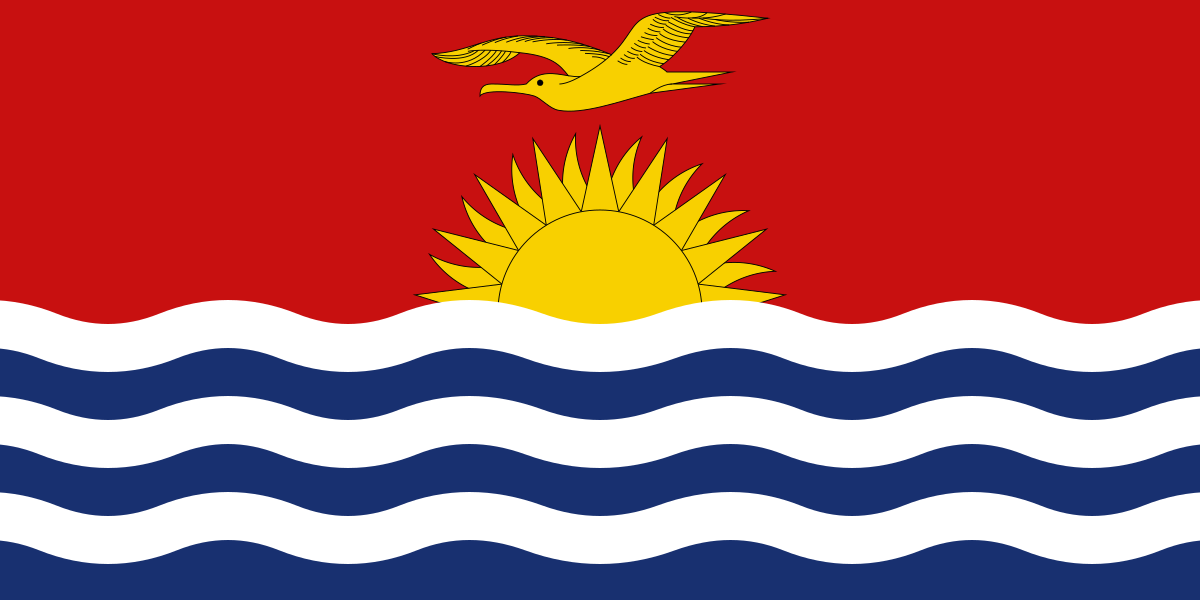
 Langzeit-Expat-Leitfaden · Kiribati
Langzeit-Expat-Leitfaden in Kiribati
Visa, Aufenthaltswege, Steuerpflichten und Zugang zum Gesundheitssystem für Langzeit-Expats
Langzeit-Expat-Leitfaden für Kiribati
Relocating to Kiribati requires careful planning regarding visas and residency, as the processes are generally straightforward but can lack the detailed categories found in larger economies. The primary immigration authority is the Department of Immigration under the Ministry of Justice.
-
Visa-Free Entry and Tourist Stay Limits:
- Citizens of many countries, including the United States, United Kingdom, EU member states, Australia, New Zealand, Canada, and most Pacific Island Forum countries, are generally granted visa-free entry for tourism purposes. The typical stay limit for tourists is 30 days, though this can sometimes be extended locally for valid reasons. Visitors must hold a valid passport (at least 6 months validity), a return or onward ticket, and sufficient funds for their stay.
-
Temporary Residency Tracks:
- Work Visas/Permits: Foreigners intending to work in Kiribati must obtain a work permit. This process typically involves an employer sponsoring the applicant. The employer must demonstrate that no qualified Kiribati national is available for the position. The application is made to the Department of Immigration, often requiring a job offer letter, educational qualifications, police clearance, and a medical certificate. Work permits are usually issued for a specific period (e.g., 1-3 years) and are tied to the employer.
- Study Visas: For those accepted into educational institutions in Kiribati, a student visa is required. This generally involves proof of enrolment, financial solvency, and a valid passport. Given the limited higher education infrastructure, this is less common for international expats.
- Family Reunion/Dependent Visas: Spouses and dependent children of work permit holders or Kiribati citizens can apply for dependent visas. Documentation typically includes marriage certificates, birth certificates, and proof of the primary applicant's visa status or citizenship.
- Investment Visas: Kiribati does not have a formal, structured 'investment visa' program akin to those in larger economies. However, significant foreign investment that creates employment and contributes to the national economy may facilitate the approval of long-term business visas or work permits for key personnel. This is assessed on a case-by-case basis by the government.
-
Digital Nomad or Remote Worker Visa Programmes:
- As of May 2026, Kiribati does not offer a specific digital nomad or remote worker visa program. Foreigners wishing to work remotely from Kiribati would typically need to enter on a tourist visa (if eligible) and strictly adhere to its conditions, which generally prohibit employment. For longer stays or any form of work, a standard work permit would be required, which necessitates local employment sponsorship.
-
Permanent Residency:
- Permanent residency in Kiribati is rarely granted to foreigners and is not a readily available pathway. It is typically reserved for individuals with long-standing ties to the country, such as those married to Kiribati citizens for many years, or individuals who have made exceptional contributions to the nation over an extended period (e.g., 10+ years of continuous legal residency and employment). There is no defined 'points-based' system or clear timeline; applications are assessed individually by the Ministry of Justice and are subject to high discretion.
-
Citizenship:
- Kiribati citizenship can be acquired through birth, descent, or naturalisation. Naturalisation typically requires a significant period of continuous legal residency (e.g., 5-7 years minimum), good character, an intention to reside permanently, and often some level of integration into Kiribati society. Marriage to a Kiribati citizen can shorten the residency requirement. The process is complex and requires approval from the President and Cabinet.
-
Application Process:
- Where to Apply: Visa applications are generally made at a Kiribati diplomatic mission abroad (if available) or, more commonly, upon arrival for visa-exempt nationalities. For work permits and long-term residency, applications are submitted to the Department of Immigration in South Tarawa. For those applying from outside Kiribati, it is advisable to contact the nearest Kiribati High Commission or Embassy, or the Department of Immigration directly.
- Documentation: Common requirements include a valid passport, passport-sized photos, application forms, police clearance certificates, medical examination reports, proof of financial means, return/onward tickets, and specific documents related to the visa type (e.g., job offer, enrolment letter, marriage certificate).
- Fees: Visa and permit fees are generally modest, typically ranging from AUD 50-300 (approx. USD 35-200) depending on the type and duration. Fees are subject to change, so always confirm with the Department of Immigration.
- Timelines: Tourist visas are granted on arrival. Work permit and dependent visa processing can take several weeks to a few months, depending on the completeness of the application and government workload.
-
Renewal Procedures:
- Temporary visas and work permits can be renewed by applying to the Department of Immigration before their expiry. Requirements are similar to initial applications, often including proof of continued employment or purpose of stay.
-
Common Pitfalls and Refusal Reasons:
- Incomplete Documentation: The most common reason for delays or refusal. Ensure all required documents are provided and correctly filled.
- Lack of Sponsorship: For work permits, a clear and legitimate job offer from a Kiribati-based employer is crucial.
- Overstaying: Overstaying a visa is a serious offense and can lead to fines, detention, and future entry bans.
- Criminal Record: Applicants with a significant criminal history are likely to be refused.
- Health Concerns: Failure to pass a medical examination can lead to refusal.
It is highly recommended to contact the Kiribati Department of Immigration directly or consult with a local legal expert in Kiribati for the most current and specific advice tailored to your situation.
Understanding tax obligations in Kiribati is crucial for long-term expats. The primary tax authority is the Kiribati Revenue Division under the Ministry of Finance and Economic Development. Kiribati uses the Australian Dollar (AUD) as its currency.
-
Tax Residency Rules:
- A foreigner generally becomes a tax resident of Kiribati if they are physically present in the country for more than 183 days in any 12-month period. Residency can also be established if an individual's 'usual place of abode' is in Kiribati, or if they are domiciled in Kiribati, even if they spend less than 183 days. Tax residents are generally taxed on their worldwide income, while non-residents are taxed only on income sourced within Kiribati.
-
Income Tax Rates and Brackets:
- Kiribati operates a progressive income tax system for individuals.
- For Residents (as of May 2026, subject to annual budget changes):
- Income up to AUD 6,000 per annum: 0% (tax-free threshold)
- Income from AUD 6,001 to AUD 12,000: 10%
- Income from AUD 12,001 to AUD 24,000: 20%
- Income above AUD 24,000: 30%
- For Non-Residents: Non-residents are typically taxed at a flat rate on their Kiribati-sourced income, often at a higher rate than the lowest resident bracket, or at the applicable resident rates without the benefit of the tax-free threshold, depending on the income type. It is crucial to confirm the specific non-resident rates with the Kiribati Revenue Division.
-
Double Taxation Treaties:
- Kiribati has a limited number of double taxation treaties (DTTs). As of May 2026, Kiribati has active DTTs with Australia and New Zealand. These treaties aim to prevent individuals and companies from being taxed twice on the same income in both countries. Expats from these nations should consult the specific treaty details. For expats from countries without a DTT, it is essential to understand both Kiribati's tax laws and their home country's foreign tax credit rules.
-
Social Security and Pension Contributions for Foreigners:
- The Kiribati Provident Fund (KPF) is the national social security scheme. Both employers and employees are generally required to contribute to the KPF. For foreigners on work permits, contributions are typically mandatory. The current contribution rate is usually 5% from the employee's salary and 5% from the employer, totaling 10% of the gross wage. These contributions are generally not refundable upon leaving Kiribati unless specific conditions are met, which are rare for short-term expats.
-
Tax Filing Requirements, Deadlines, and How to File:
- The tax year in Kiribati runs from January 1st to December 31st.
- Individual income tax returns are typically due by March 31st of the following year.
- Employers are responsible for withholding Pay-As-You-Earn (PAYE) tax from employee salaries and remitting it to the Kiribati Revenue Division monthly.
- Individuals with other sources of income or those not subject to PAYE must file an annual income tax return. Forms are available from the Kiribati Revenue Division, and filing is done manually or through designated tax agents.
-
Tax Deductions and Allowances:
- Kiribati's tax system offers limited deductions and allowances compared to many Western countries. The primary allowance is the tax-free threshold. Specific deductions may be available for certain expenses, but these are generally restricted. It's best to consult the Kiribati Revenue Division for current applicable deductions.
-
Property Ownership Tax for Foreigners:
- There is no direct property ownership tax (like an annual council tax or rates) on land or buildings in Kiribati. However, land tenure is complex, with most land being customary or government-owned. Foreigners generally cannot own freehold land. Leases are possible, and stamp duty may apply to lease agreements and property transfers.
-
Capital Gains Tax:
- Kiribati does not currently impose a capital gains tax on the sale of assets such as real estate, shares, or other investments.
-
VAT and Other Indirect Taxes:
- Kiribati has a Value Added Tax (VAT), known locally as the Goods and Services Tax (GST). The standard GST rate is 12.5% (as of May 2026) and applies to most goods and services consumed in Kiribati. This is included in the price of most items and services you purchase daily.
- Other indirect taxes include customs duties on imported goods and excise duties on specific items like alcohol, tobacco, and fuel.
-
Wealth or Net Worth Taxes:
- Kiribati does not levy wealth or net worth taxes.
-
When to Engage a Local Tax Advisor:
- It is highly recommended to engage a local tax advisor or accountant in Kiribati, especially if you have complex income streams, are self-employed, own a business, or have significant assets. They can provide up-to-date information, ensure compliance, and help navigate the specific nuances of Kiribati's tax laws, particularly concerning your tax residency status and any applicable double taxation treaties.
-
Penalties for Non-Compliance:
- Penalties for non-compliance can include fines for late filing or non-filing of returns, interest on unpaid taxes, and more severe penalties for tax evasion. The Kiribati Revenue Division has powers to enforce tax laws, and non-compliance can lead to legal action.
The healthcare system in Kiribati is primarily public and faces significant challenges due to its remote location, scattered population, and limited resources. Expats should be prepared for a basic level of care and strongly consider comprehensive private health insurance.
-
Healthcare System Overview:
- Kiribati operates a public healthcare system funded by the government through general taxation and international aid. The Ministry of Health and Medical Services (MHMS) is responsible for its administration.
- The main hospital is the Tungaru Central Hospital in Nawerewere, South Tarawa. There are also smaller hospitals on Kiritimati (Christmas Island) and some outer islands, along with health centers and dispensaries.
- Private healthcare facilities are virtually non-existent in Kiribati. All major medical services are provided through the public system.
-
Access Rights for Foreigners:
- Tourists: Generally, tourists can access public healthcare facilities for emergencies, but they will be expected to pay for services rendered. Travel insurance with medical coverage is essential.
- Residents and Workers: Foreigners holding valid work permits or long-term residency are typically eligible to access public healthcare services, often at the same subsidized rates as Kiribati citizens. However, the quality and scope of services remain limited.
-
Health Insurance:
- What is Required: While there is no mandatory government health insurance scheme for expats, comprehensive private international health insurance is absolutely essential and strongly recommended for all foreigners living in Kiribati. This is due to the limited local medical capabilities.
- What Public Coverage Covers: Public healthcare covers basic medical consultations, some medications, and emergency treatments. However, it does not cover specialized treatments, complex surgeries, or medical evacuations, which are often necessary for serious conditions.
-
How to Register with the Public Healthcare System as a Foreigner:
- There isn't a formal 'registration' process akin to national health services in other countries. Access is generally granted upon presentation of a valid visa/work permit at public health facilities. For long-term residents, it's advisable to visit Tungaru Central Hospital to understand the local procedures and available services.
-
Private Health Insurance:
- Recommended Providers: Since there are no local private health insurance providers in Kiribati, expats must secure international health insurance. Reputable providers include Cigna Global, Allianz Care, Bupa Global, Aetna International, and GeoBlue.
- Typical Costs: The cost of international health insurance varies widely based on age, coverage level, and chosen deductible, but can range from USD 200-800+ per month for comprehensive plans that include medical evacuation. Given the critical need for evacuation, ensure your policy explicitly covers this.
- Importance of Medical Evacuation: For any serious illness or injury, medical evacuation to Australia, New Zealand, or Fiji is almost always necessary. Ensure your private insurance policy includes robust coverage for emergency medical evacuation, as this can cost tens of thousands of dollars.
-
Quality of Public vs. Private Care in Practice:
- Public Care: The quality of public healthcare is generally considered basic. Facilities can be old, equipment limited, and there is a shortage of specialist doctors, nurses, and medical supplies. While general practitioners are available, complex diagnoses and treatments are challenging. Hygiene standards may not meet international expectations.
- Private Care: As noted, there are no private hospitals or clinics offering advanced care in Kiribati. Any 'private' care would involve paying for public services or seeking treatment abroad.
-
Emergency Services:
- How to Access: Emergency services are accessed by going directly to the nearest hospital or health center. The main emergency department is at Tungaru Central Hospital in South Tarawa. There is no centralized emergency telephone number like '911' or '999' that functions reliably across the country for immediate ambulance dispatch. Ambulances are limited and may not be readily available, especially outside South Tarawa.
- What to Expect: Expect basic emergency care. For critical conditions, stabilization and preparation for medical evacuation will be the priority.
-
Prescription Medications:
- Availability: Basic and essential medications are generally available at public hospital pharmacies. However, the supply can be inconsistent, and specialized or brand-name medications may not be stocked.
- Cost: Medications obtained through public facilities are usually subsidized or free for residents. For specific or imported medications, costs can be higher.
- How to Obtain: A prescription from a local doctor is required. It is highly advisable for expats to bring a sufficient supply of any essential prescription medications they require, along with a doctor's note, as availability cannot be guaranteed.
-
Dental and Vision Care:
- Public Coverage: Basic dental care (e.g., extractions, fillings) is available through public hospitals and health centers, but services are limited. Vision care is very basic, with limited access to optometrists or specialized eye care.
- Out-of-Pocket: For comprehensive dental work, orthodontics, or specialized vision care, expats will almost certainly need to travel abroad, typically to Fiji, Australia, or New Zealand.
-
Mental Health Services Available to Expats:
- Mental health services in Kiribati are extremely limited. There are very few trained mental health professionals, and facilities are basic. Expats requiring mental health support should plan to access these services remotely from their home country or through international telehealth providers covered by their private insurance. Local support networks may be available through expat communities or religious organizations.
-
Maternity Care and Childbirth Options:
- Maternity care is provided through public hospitals and health centers. While basic prenatal and postnatal care is available, facilities for childbirth are limited. For high-risk pregnancies or those desiring more advanced medical support during childbirth, medical evacuation to a neighboring country with better facilities (e.g., Fiji, Australia) is often recommended and should be covered by private insurance.
-
Vaccinations and Travel Health Requirements:
- Routine Vaccinations: Ensure all routine vaccinations (MMR, DTP, Polio, etc.) are up-to-date.
- Recommended Vaccinations: Typhoid and Hepatitis A are strongly recommended due to food and water safety concerns. Hepatitis B is also often advised.
- Mosquito-Borne Diseases: Dengue fever is endemic. Take precautions against mosquito bites (repellent, nets).
- Water and Food Safety: Drink only bottled or boiled water. Be cautious with uncooked food and street food.
- Medical Kit: Carry a comprehensive personal medical kit with basic first aid supplies, over-the-counter medications, and any personal prescriptions. Consult a travel health specialist well in advance of your relocation.
Mehr Einblicke für deinen Umzug nach Kiribati
Umfassende Ratgeber und datengetriebene Analysen.
Budget & Ausgaben
Ist dein Lebensstil erschwinglich? Von Lebensmittelpreisen bis zu Nebenkosten – sieh, wie die Kosten im Vergleich zu deiner Heimat sind.
Ratgeber lesenSchulen & Familie
Die richtige Schule zu finden hat Priorität. Vergleiche internationale Schulen und Lehrplanstandards.
Ratgeber lesenVerkehr & Transport
Wie kommt man voran? ÖPNV-Abdeckung, Flughäfen und Infrastrukturqualität auf einen Blick.
Ratgeber lesen