
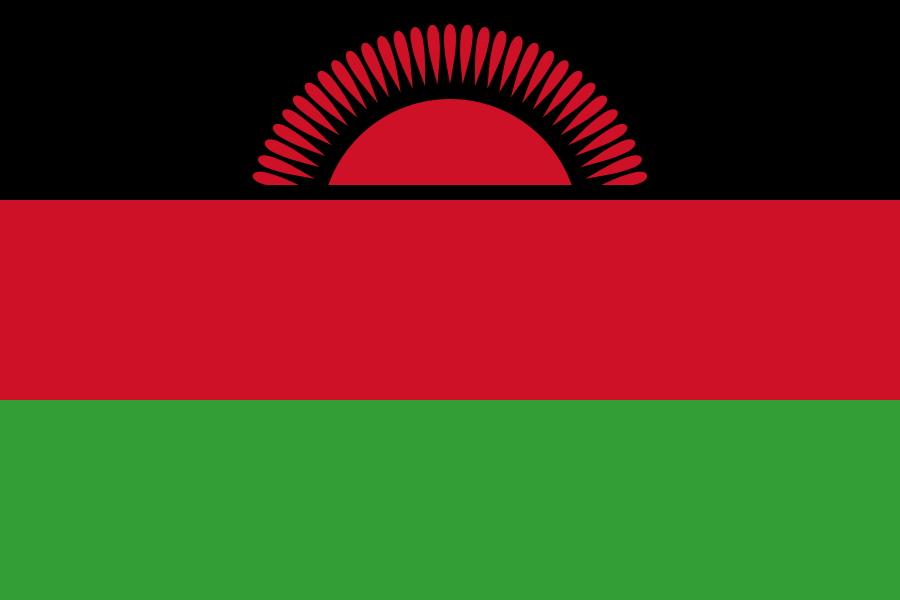
 Langzeit-Expat-Leitfaden · Malawi
Langzeit-Expat-Leitfaden in Malawi
Visa, Aufenthaltswege, Steuerpflichten und Zugang zum Gesundheitssystem für Langzeit-Expats
Langzeit-Expat-Leitfaden für Malawi
Malawi's immigration policies are managed by the Department of Immigration and Citizenship Services (DICS). As of May 2026, the country is working towards streamlining its visa processes, though some categories remain complex.
-
Visa-free entry and tourist stay limits:
- Visa-free: Citizens of many Commonwealth countries, including the UK, and several African nations (e.g., South Africa, Zambia, Tanzania) can enter Malawi visa-free for stays typically up to 90 days. This is subject to change, and it's always advisable to check the DICS website prior to travel.
- Visa-on-arrival/e-Visa: Citizens of the EU, US, Canada, Australia, and many other countries generally require a visa. Malawi has an e-Visa system, which is the recommended method for obtaining a tourist visa prior to arrival. A tourist visa typically grants a stay of up to 30 days, extendable up to a maximum of 90 days in total.
-
Temporary Residency Tracks:
- Work Permits (Temporary Employment Permit - TEP): Required for any foreigner intending to work in Malawi. Employers typically sponsor these. The application involves submitting a detailed business plan, proof of local recruitment efforts (to demonstrate no qualified Malawian is available), educational qualifications, and a clean criminal record. TEPs are usually granted for 1-2 years and are renewable.
- Business Residence Permit (BRP): For individuals intending to establish or invest in a business in Malawi. Requires proof of significant investment, a viable business plan, and financial capacity. These are also typically issued for 1-2 years.
- Student Visas: Issued to foreigners accepted into Malawian educational institutions. Requires an acceptance letter from a recognized institution, proof of financial means to cover tuition and living expenses, and a valid passport.
- Dependent Permits: Issued to spouses and dependent children of individuals holding valid work or business permits. These permits do not automatically grant the right to work.
-
Permanent Residency:
- Eligibility: Generally, permanent residency is difficult to obtain and is typically considered after a significant period (e.g., 5-7 years) of continuous legal residence in Malawi under a valid temporary permit, coupled with substantial contributions to the country's economy or society. Marriage to a Malawian citizen can also be a pathway after a qualifying period.
- Timeline & Process: The process is lengthy and involves rigorous background checks, financial assessments, and interviews. It can take several years from application to approval.
-
Citizenship:
- Requirements: Citizenship can be acquired by birth, descent, registration, or naturalization. Naturalization typically requires at least 7 years of continuous legal residency immediately preceding the application, good character, adequate knowledge of a local language, and an intention to reside permanently in Malawi. Marriage to a Malawian citizen can shorten this period.
- Timeline: The naturalization process can be protracted, often taking several years after meeting the residency requirements.
-
Work Permits and Employment Authorisation:
- As mentioned, a Temporary Employment Permit (TEP) is mandatory. The application process is initiated by the employer in Malawi. It involves submitting the applicant's CV, academic certificates, police clearance, medical certificate, and the employer's justification for hiring a foreigner. The DICS scrutinizes applications to ensure local employment opportunities are not unduly displaced.
-
Digital Nomad or Remote Worker Visa Programmes:
- As of May 2026, Malawi does not have a specific digital nomad or remote worker visa programme. Remote workers wishing to reside in Malawi would typically need to explore options like a Business Residence Permit (if they establish a local entity) or a standard tourist visa, which does not permit work, and would require frequent exits and re-entries, which is not sustainable for long-term residency.
-
Student Visas:
- Requires an official acceptance letter from a registered Malawian educational institution, proof of sufficient funds for living expenses and tuition, and a valid passport. Applications are made through DICS.
-
Family Reunion and Dependent Visas:
- Spouses and dependent children of TEP or BRP holders can apply for Dependent Permits. These permits are tied to the primary applicant's status and expire with it. They generally do not confer the right to work.
-
Application Process:
- Where to apply: For e-Visas, apply online via the official DICS e-Visa portal. For other permits (TEP, BRP, Student, Dependent), applications are typically submitted to the DICS headquarters in Blantyre or Lilongwe, or through Malawian diplomatic missions abroad.
- Documentation: Varies by visa type but commonly includes a valid passport, passport-sized photos, application forms, police clearance certificates, medical examination reports, proof of financial means, invitation letters (for business/work), and educational certificates.
- Fees: Visa and permit fees vary significantly. A single-entry tourist e-Visa might cost around USD 50-75 (as of early 2026). Work permits are considerably more expensive, potentially ranging from MWK 200,000 to MWK 500,000+ per year (approx. USD 115-290+, based on MWK 1700/USD, May 2026), depending on the category and duration. Always check the latest fee schedule on the DICS website.
- Timelines: Tourist e-Visas can be processed within a few business days. Work and business permits can take several weeks to a few months due to the extensive vetting process.
-
Renewal Procedures:
- Most temporary permits are renewable. Applications for renewal should be submitted well in advance (e.g., 1-2 months) before the current permit expires to avoid penalties or overstaying.
-
Common Pitfalls and Refusal Reasons:
- Incomplete documentation: The most frequent reason for delays or refusals.
- Lack of clear purpose: For work permits, failure to demonstrate that no qualified Malawian is available for the role.
- Insufficient funds: For student or business visas, inability to prove financial self-sufficiency.
- Criminal record: Any significant criminal history can lead to refusal.
- Overstaying previous visas: Can lead to fines, deportation, and future entry bans.
- Providing false information: Will result in immediate refusal and potential legal consequences.
Malawi's tax system is administered by the Malawi Revenue Authority (MRA). Foreigners residing in Malawi need to understand their tax obligations to ensure compliance.
-
Tax Residency Rules:
- A foreigner generally becomes a tax resident in Malawi if they are physically present in the country for 183 days or more in any 12-month period, which may not necessarily align with a tax year. Residency can also be established if an individual has a 'permanent home' in Malawi and is present for any period in the tax year. Tax residency determines the scope of an individual's tax liability.
-
Income Tax Rates and Brackets (for residents vs non-residents):
- Malawi operates a Pay As You Earn (PAYE) system for employment income. Tax rates are progressive.
- Residents: Tax residents are taxed on their worldwide income. As of the 2025/2026 tax year, the income tax brackets for individuals are generally:
- Up to MWK 1,200,000 per annum (approx. USD 700): 0%
- MWK 1,200,001 to MWK 3,000,000 per annum (approx. USD 700-1,765): 15%
- MWK 3,000,001 to MWK 6,000,000 per annum (approx. USD 1,765-3,530): 30%
- MWK 6,000,001 to MWK 12,000,000 per annum (approx. USD 3,530-7,060): 35%
- Above MWK 12,000,000 per annum (approx. USD 7,060): 40%
- Non-residents: Non-residents are generally taxed only on income sourced in Malawi. This is often subject to a final withholding tax at a flat rate, which can vary depending on the type of income (e.g., dividends, interest, royalties, professional fees). For employment income, non-residents might be subject to the same PAYE rates if working in Malawi, but their tax liability is limited to Malawian-sourced income.
- Note: These figures are approximate and based on current information as of May 2026. Exchange rate used: MWK 1700 = USD 1. Tax brackets are subject to annual review by the government.
-
Double Taxation Treaties (DTTs):
- Malawi has active Double Taxation Treaties with several countries to prevent individuals from being taxed twice on the same income. Key countries with active DTTs include:
- United Kingdom
- South Africa
- Zambia
- Norway
- Denmark
- Sweden
- Kenya
- Tanzania
- These treaties typically cover income tax and capital gains tax, providing rules for determining tax residency and allocating taxing rights between the two countries.
- Malawi has active Double Taxation Treaties with several countries to prevent individuals from being taxed twice on the same income. Key countries with active DTTs include:
-
Social Security and Pension Contributions for Foreigners:
- Malawi has a mandatory National Pension Scheme (NPS) for employees. Both employers and employees are required to contribute. As of May 2026, the contribution rate is typically 10% of gross salary, with the employer contributing 6% and the employee 4%. Foreigners working in Malawi under a valid work permit are generally required to contribute to the NPS, unless they are covered by a reciprocal social security agreement or can demonstrate they are contributing to an equivalent scheme in their home country (though exemptions are rare and require MRA approval).
-
Tax Filing Requirements, Deadlines, and How to File:
- Filing: Individuals whose tax is fully covered by PAYE (i.e., they have only one employer and no other taxable income) may not need to file an annual tax return. However, individuals with multiple income sources, business income, or those wishing to claim specific deductions must file.
- Deadlines: The tax year in Malawi runs from 1st July to 30th June. Annual tax returns for individuals are typically due by 30th September following the end of the tax year.
- How to File: Returns can be filed manually at MRA offices or, increasingly, through the MRA's online tax portal (MRA Msonkho Online).
-
Tax Deductions and Allowances:
- Limited deductions are available for individuals. These often include contributions to approved pension schemes (like the NPS) and certain life insurance premiums. Specific allowances are built into the tax brackets (e.g., the tax-free threshold).
-
Property Ownership Tax for Foreigners:
- Foreigners can own property in Malawi, typically through long-term leases (up to 99 years) rather than freehold. Property owners are subject to land rates (property taxes) levied by local councils, which vary by location and property value. There is also a stamp duty payable on property transfers.
-
Capital Gains Tax (CGT):
- Capital gains arising from the disposal of assets (e.g., shares, real estate) are generally subject to CGT in Malawi. The rate is typically 15% for individuals. Certain exemptions may apply, such as the sale of a primary residence under specific conditions.
-
VAT and Other Indirect Taxes:
- Value Added Tax (VAT): The standard VAT rate in Malawi is 16.5% (as of May 2026) and applies to most goods and services. Expats will encounter this in their daily purchases.
- Excise Duty: Levied on specific goods such as alcohol, tobacco, and petroleum products.
- Import Duties: Applicable to goods imported into Malawi.
-
Wealth or Net Worth Taxes:
- Malawi does not currently impose wealth or net worth taxes on individuals.
-
When to Engage a Local Tax Advisor:
- It is highly recommended to engage a local tax advisor if you have complex income streams, own a business, have significant investments, or if you are unsure about your tax residency status or specific obligations. Tax laws can be intricate and subject to change, and a local expert can ensure full compliance and optimize your tax position.
-
Penalties for Non-Compliance:
- The MRA imposes penalties for late filing, late payment, and tax evasion. These can include significant fines and interest charges on unpaid taxes. In severe cases of evasion, criminal prosecution is possible.
Malawi's healthcare system is characterized by a mix of public, private, and mission-run facilities. For long-term expats, understanding its structure and limitations is crucial for health planning.
-
Healthcare System Overview:
- Public Healthcare: The public system is largely funded by the government and donor organizations. It is structured in a tiered system, from community health workers and health posts at the grassroots level, to health centers, district hospitals, and finally, central hospitals (e.g., Queen Elizabeth Central Hospital in Blantyre, Kamuzu Central Hospital in Lilongwe). While accessible to all citizens, public facilities often suffer from underfunding, staff shortages, limited equipment, and long waiting times.
- Private Healthcare: Primarily concentrated in urban centers (Lilongwe, Blantyre, Mzuzu), private clinics and hospitals offer a higher standard of care, better-equipped facilities, and shorter waiting times. These are fee-for-service and are the preferred choice for most expats.
- Mission Hospitals: Run by religious organizations, these facilities often bridge the gap between public and private, offering subsidized care with generally better standards than public hospitals, especially in rural areas.
-
Access Rights for Foreigners:
- Tourists: Can access public and private healthcare facilities. For public facilities, they would typically be expected to pay a fee. Private facilities are always fee-for-service.
- Residents/Workers: Foreigners with valid residency or work permits have the right to access public healthcare, but due to the quality and resource limitations, most expats opt for private care. There is no automatic public health insurance coverage for expats.
-
Health Insurance:
- Required: While not legally mandated for visa purposes, comprehensive private health insurance is highly recommended and practically essential for all expats in Malawi. Public healthcare is generally not sufficient for expat needs.
- Public Coverage: The public system provides basic services, but it does not offer comprehensive insurance coverage in the way Western public systems do. Expats using public facilities will likely pay out-of-pocket for services, though costs are significantly lower than private care.
-
How to Register with the Public Healthcare System as a Foreigner:
- There isn't a formal 'registration' process for foreigners in the public system akin to national health services in other countries. You can simply present yourself at a public clinic or hospital. However, you will be treated as a paying patient, and the quality of care may not meet international standards.
-
Private Health Insurance:
- Recommended Providers: International health insurance providers with a strong presence in Africa are recommended. Examples include Cigna Global, Aetna International, Bupa Global, and Allianz Care. Some local providers also offer plans, but international plans often include options for medical evacuation, which is critical.
- Typical Costs: Costs vary widely based on age, coverage level, and chosen provider. A comprehensive international plan for an individual could range from USD 2,000 to USD 8,000+ per year (as of May 2026). Local plans might be cheaper but offer less extensive coverage, especially for international evacuation.
-
Quality of Public vs. Private Care in Practice:
- Public Care: Basic, often overcrowded, limited diagnostic capabilities, frequent drug shortages, and a high patient-to-staff ratio. Serious conditions often require referral to central hospitals, which can still be under-resourced.
- Private Care: Significantly better. Private clinics and hospitals in Lilongwe and Blantyre offer a range of services, including general practitioners, specialists, basic diagnostics (X-rays, ultrasounds), and sometimes minor surgery. However, for complex procedures, advanced diagnostics (e.g., MRI, CT scans), or critical emergencies, medical evacuation to South Africa or another country with advanced medical facilities is often necessary.
-
Emergency Services:
- How to Access: The national emergency number is 997 for ambulance services, but response times can be slow and unreliable, especially outside major cities. For private emergencies, it's often quicker to directly contact a private clinic or hospital that offers ambulance services or arrange private transport.
- What to Expect: Public ambulances are scarce and poorly equipped. Private ambulance services are available in major cities but are expensive. In critical situations, expats often rely on their private health insurance's emergency response and medical evacuation provisions.
-
Prescription Medications:
- Availability: Basic medications are generally available in pharmacies in urban areas. However, specific or specialized drugs may be difficult to find and might require importation or travel abroad. Counterfeit medications can be an issue, so it's crucial to use reputable pharmacies.
- Cost: Generally lower than in Western countries, but costs can vary. Expats with private insurance may have their prescriptions covered.
- How to Obtain: A prescription from a licensed Malawian doctor is usually required for most prescription medications.
-
Dental and Vision Care:
- Public Coverage: Very limited and basic dental and vision services are available in public hospitals, often with long waits and rudimentary equipment.
- Out-of-Pocket/Private: Private dental clinics and opticians are available in major cities, offering a much higher standard of care. These services are typically paid out-of-pocket or covered by comprehensive private health insurance plans.
-
Mental Health Services Available to Expats:
- Mental health services in Malawi are developing but remain limited, especially in the public sector. Private psychologists and counselors are available in Lilongwe and Blantyre, often catering to the expat community. Telehealth options with providers from one's home country are also a common solution for expats seeking mental health support.
-
Maternity Care and Childbirth Options:
- Public maternity wards can be overcrowded and under-resourced. Private hospitals in Lilongwe and Blantyre offer better facilities and more personalized care for childbirth. Many expat women choose to deliver in South Africa or their home country due to concerns about the quality of care for complex deliveries or neonatal care in Malawi.
-
Vaccinations and Travel Health Requirements:
- Required Vaccinations: A Yellow Fever vaccination certificate is required for travelers arriving from or transiting through countries with a risk of Yellow Fever transmission. It is also recommended for all travelers to Malawi.
- Recommended Vaccinations: Routine vaccinations (MMR, DPT, Polio), Hepatitis A & B, Typhoid, and Rabies are strongly recommended. Consult a travel health clinic well in advance of your move.
- Malaria: Malawi is a high-risk malaria zone. Malaria prophylaxis is essential. Other preventative measures include using insect repellent, sleeping under mosquito nets, and wearing long sleeves and trousers, especially at dusk and dawn.
- HIV/AIDS: Prevalence is high. Exercise extreme caution regarding blood transfusions and sexual contact.
- Water and Food Safety: Drink only bottled or purified water. Be cautious with street food and ensure all food is thoroughly cooked.
Mehr Einblicke für deinen Umzug nach Malawi
Umfassende Ratgeber und datengetriebene Analysen.
Budget & Ausgaben
Ist dein Lebensstil erschwinglich? Von Lebensmittelpreisen bis zu Nebenkosten – sieh, wie die Kosten im Vergleich zu deiner Heimat sind.
Ratgeber lesenSchulen & Familie
Die richtige Schule zu finden hat Priorität. Vergleiche internationale Schulen und Lehrplanstandards.
Ratgeber lesenVerkehr & Transport
Wie kommt man voran? ÖPNV-Abdeckung, Flughäfen und Infrastrukturqualität auf einen Blick.
Ratgeber lesen