
Canada is often imagined as an almost empty country of forests, lakes, mountains and limitless space. The image is not wrong—but it misses the central reality of modern Canada: most people live in a relatively narrow southern belt, and population growth has transformed housing, immigration pathways and daily life faster than infrastructure could always follow.
For prospective expats, Canada remains a compelling destination: politically stable, highly diverse, economically advanced and full of outdoor access. But the “easy move to Canada” narrative is outdated. Today's decision requires a more precise view of where people live, why Canada grew so rapidly, and what the country's demographic reset means for newcomers.
The short version
- Canada's population was about 3.46 million at Confederation in 1867; it was estimated at roughly 41.7 million in mid-2025.
- Its population is geographically concentrated: the overwhelming share lives close to the US border, particularly in Ontario, Québec, British Columbia and the Prairie cities.
- Immigration is now the dominant source of population growth; the federal government states it accounts for nearly all growth, while immigrants make up around 23% of the country's population.
- Following exceptionally rapid growth in 2022–24, Canada has tightened the number of new temporary residents—especially students and temporary workers—while maintaining sizeable permanent-resident admissions.
- For expats, the opportunity is still real, but city choice, career strategy, immigration status and a realistic housing budget matter more than ever. canada
Before “Canada”: Indigenous population and settlement
Canada's population story did not begin with Confederation, European immigration, or the modern census. First Nations, Inuit and Métis peoples lived across the land for millennia, with sophisticated trade networks, governance systems, languages and distinct regional cultures.
There is no single definitive pre-contact population number because records did not exist in the modern statistical sense and estimates depend on methods and assumptions. Historical estimates for Indigenous populations within what is now Canada vary widely. One reference places possible estimates between roughly 200,000 and 500,000 people, while other research has suggested substantially higher figures. What is clear is that Indigenous societies were present across the continent long before European arrival. thecanadianencyclopedia
European settlement, colonial expansion, forced displacement and epidemics brought devastating consequences. Diseases introduced through contact caused major population losses among Indigenous communities, alongside dispossession from land and policies that weakened or disrupted traditional social, economic and political systems.
That history matters for anyone relocating to Canada today. Canada is a multicultural immigration country, but it is also a settler-colonial state built on Indigenous lands. In practical terms, this is reflected in land acknowledgements, public debate, education, reconciliation initiatives and the strong cultural presence of First Nations, Métis and Inuit communities across the country.
Confederation to the modern era
At Confederation in 1867, Canada had an estimated population of 3,463,000. The first national census followed in 1871, initially covering the four original provinces: Ontario, Québec, New Brunswick and Nova Scotia. www150.statcan.gc
Growth during the following century came from a combination of births, territorial expansion, settlement, industrialisation and immigration.
| Period | Approximate population | What drove change |
|---|---|---|
| 1851 | 2.4 million | Colonial settlement concentrated in the east |
| 1867 | 3.46 million | Confederation; early national population base |
| 1901 | 5.4 million | Immigration, agricultural settlement and western expansion |
| 1911 | 7.2 million | Large pre-First World War immigration wave |
| 1951 | 14.0 million | Postwar expansion and baby boom |
| 1971 | 21.6 million | Urbanisation and increasingly diverse immigration |
| 2001 | 30.0 million | Continued immigration and metropolitan growth |
| 2011 | 33.5 million | Growth focused in large urban regions |
| 2025 | about 41.7 million | Immigration-led population growth and temporary migration |
Statistics Canada's historical series shows steady long-term expansion from 2.4 million people in 1851 to 33.5 million by 2011. The much sharper increase of the last decade is what has changed the national conversation: population pressure is now visible in rents, transport, medical access, classrooms and competition for entry-level jobs. www150.statcan.gc
In 1871, immigrants made up 16.1% of the population, and most had European or US origins. Canada's contemporary immigration story is much more globally diverse: by the 2021 Census, immigrants numbered about 8.3 million people, or roughly 23% of the national population—the highest proportion in more than 150 years. www150.statcan.gc
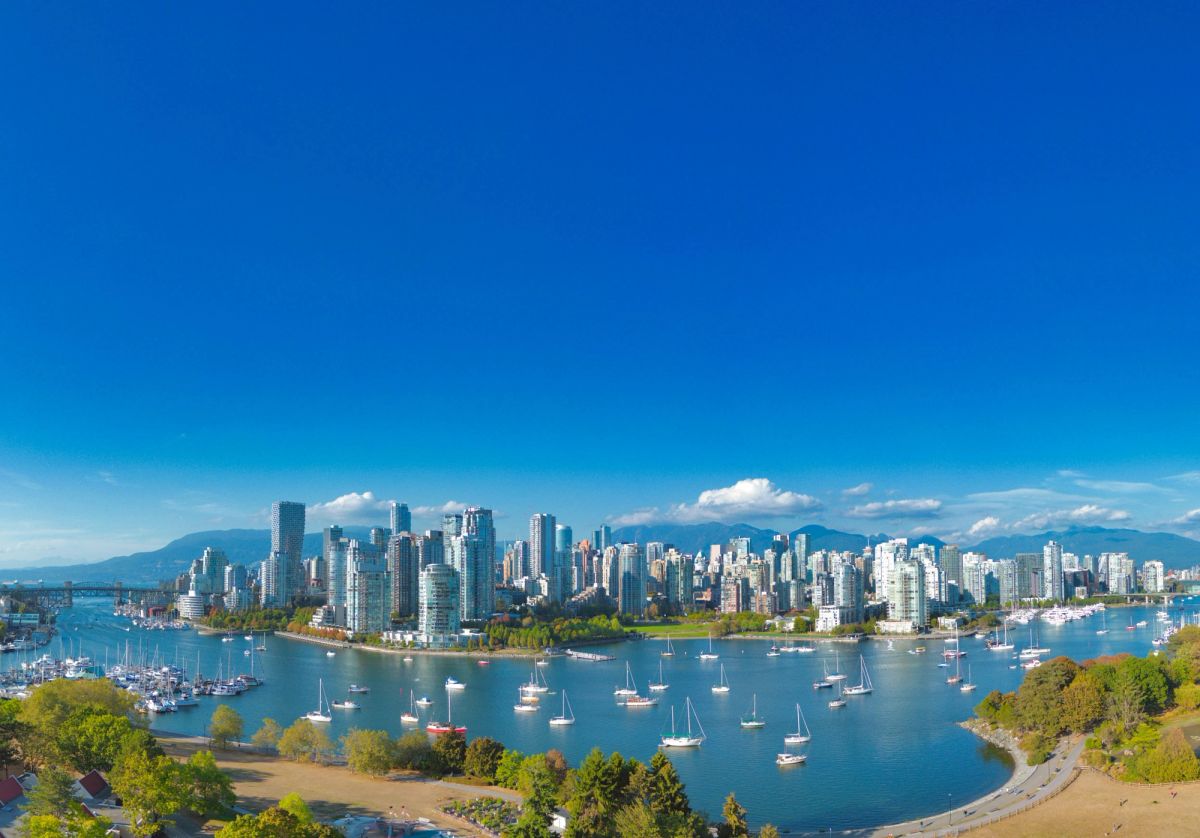
Vancouver Skyline, by Getty Images for Unsplash+
Where Canadians actually live
Canada is huge geographically but highly concentrated demographically. The country has a landmass comparable to continental-scale regions, yet the population is smaller than that of many European countries.
Canada is not evenly inhabited. Its urban and economic core runs mainly across the south, close to the US border.
The major population areas include:
- Southwest British Columbia: Vancouver, Victoria, the Lower Mainland and Fraser Valley. This is one of Canada's most internationally connected regions, with strong demand in technology, film, trade, tourism and professional services.
- The Calgary–Edmonton corridor: Alberta's two largest metropolitan areas anchor a region shaped by energy, construction, logistics, engineering, technology and provincial government.
- The Prairie cities: Winnipeg, Saskatoon and Regina are smaller than Toronto, Montréal or Vancouver but can offer lower entry costs and sometimes clearer provincial immigration pathways.
- Southern Ontario: The country's largest population and employment zone, stretching through Windsor, Hamilton, the Greater Toronto Area, Kitchener-Waterloo, Ottawa and surrounding regions.
- The Montréal–Québec City corridor: A major French-speaking urban axis with deep strengths in aerospace, AI research, games, software, higher education, culture and public administration.
- Atlantic Canada: Halifax, Moncton, Saint John, Charlottetown and St. John's are smaller but increasingly relevant for remote workers, healthcare professionals, universities and people seeking a less metropolitan lifestyle.
- The North: Yukon, Northwest Territories and Nunavut have small, dispersed populations and distinctive labour markets. They are not simply “empty Canada”; they include Indigenous communities, territorial capitals and specialised opportunities—but relocation logistics are much more demanding.
For an expat, this concentration has an important implication: moving “to Canada” is not a complete plan. Moving to Toronto, Montréal, Halifax, Calgary or Victoria means entering very different labour markets, housing conditions, language environments, climates and immigration ecosystems.

Moraine Lake, Canada by John Lee
Canada is several countries in one
For a prospective expat, Canada's headline statistics can be misleading. A country of more than 41 million people sounds large; in daily life, however, the experience can range from one of North America's busiest metropolitan regions to a small, isolated community where outdoor life, weather and long distances shape almost every decision.
The practical contrast is especially visible between the Prairies and the Pacific coast.
Saskatchewan is often reduced to a stereotype of flat land and wheat fields. Southern Saskatchewan does indeed have a strongly agricultural character, broad horizons and communities shaped by farming, resource industries and small-city life. But the northern half of the province is largely boreal forest, lakes, rivers and Canadian Shield landscape. It supports mining, remote work camps, Indigenous communities, tourism and a more isolated form of life that few newcomers experience unless work or lifestyle deliberately takes them there.
Saskatoon and Regina offer the services of mid-sized North American cities: universities, government jobs, healthcare, education, retail and local cultural life. Yet their pace is markedly slower than Toronto, Vancouver or Montréal. This can be a genuine advantage for people seeking space, calmer routines and easier access to lakes, parks, fishing, hiking or winter sports. The trade-off is a smaller labour market, fewer specialised employers and less of the always-on urban energy that international newcomers may expect.
The climate is not a minor detail. Prairie winters are long, cold and windy; in northern areas, extreme cold can become a serious practical issue rather than a romantic winter image. Summers can be beautiful, bright and highly social, but they are short—and in lake and forest regions, insects are part of life. For some people, this rhythm feels liberating. For others, especially those arriving from dense European cities, it can feel isolating after the novelty fades. reddit
British Columbia, particularly the west coast, offers an almost opposite version of Canadian life. It attracts people with forests, mountains, ocean access, mild winter temperatures by Canadian standards and a strong outdoor culture. Vancouver, Victoria and the Okanagan provide the broadest mix of work, services, cultural life and international connections in the province.

Field, British Columbia, Canada by Rahul Shanbhag, Unsplash
Outside these larger centres, however, the equation changes. Smaller coastal and interior communities can be exceptionally scenic, but day-to-day life may be more limited than the photographs suggest. Services, employment options, nightlife, medical access, public transport and year-round social opportunities can narrow quickly once you are outside the main urban centres. In many locations, outdoor pursuits are not simply an optional weekend activity; they are the central organising feature of local life.
The weather also has a personality. Parts of coastal British Columbia can have extended periods of rain and grey skies, while sunny days reveal the dramatic scenery people move there for. Someone who loves trees, water and hiking may consider that trade worthwhile. Someone who needs bright winters, dense city life and a large professional network may not. reddit
The recent population surge
Canada crossed 40 million residents in 2023. Statistics Canada estimated the population at 41,651,653 on July 1, 2025, before the total dipped to a preliminary 41,472,081 on January 1, 2026 as the number of non-permanent residents fell. www150.statcan.gc
The pace of growth immediately before that slowdown was remarkable:
- Canada added 1,098,956 people in 2022–23, a growth rate of 2.8%.
- It added 1,213,241 people in 2023–24, a growth rate of 3.0%.
- From July 2024 to July 2025, growth slowed to 389,324 people, or 0.9%.
- More than half of that 2024–25 growth occurred in the third quarter of 2024, before the number of non-permanent residents started to decline. www150.statcan.gc
This was not primarily a baby-boom story. Canada has low fertility and an ageing population. Instead, migration—permanent immigration, international students, temporary foreign workers and other temporary residents—became the main driver of change.
The government's own immigration materials state that immigration represents nearly 100% of Canada's population growth. This is also why immigration policy has become closely connected to discussions about housing affordability, labour shortages, healthcare capacity and infrastructure. canada
Why the policy changed
Canada's recent policy changes should not be interpreted as “Canada is closed.” They are better understood as a recalibration after a period when the number of temporary residents grew especially quickly.
The federal government's 2026–2028 Immigration Levels Plan sets:
| Category | 2026 target | 2027 target | 2028 target |
|---|---|---|---|
| Permanent-resident admissions | 380,000 | 380,000 | 380,000 |
| New temporary-resident arrivals | 385,000 | 370,000 | 370,000 |
| Temporary workers | 230,000 | 220,000 | 220,000 |
| International students | 155,000 | 150,000 | 150,000 |
The temporary-resident target for 2026 is substantially below the previous 2025 target of 673,650. The stated policy aim is to reduce the total temporary-resident population to below 5% of Canada's population by the end of 2027, while keeping permanent-resident admissions at 380,000 annually through 2028. canada
For prospective expats, the difference between a temporary and permanent strategy now matters more than it did a few years ago.
A study permit, open work permit or employer-sponsored temporary work permit can still be valuable. But these options should not be treated as automatic shortcuts to permanent residence. Rules, eligibility criteria, provincial nomination priorities, labour-market needs and processing practices can change. A robust relocation plan needs a plausible path from day one—not an assumption that “I will sort it out after arrival.”
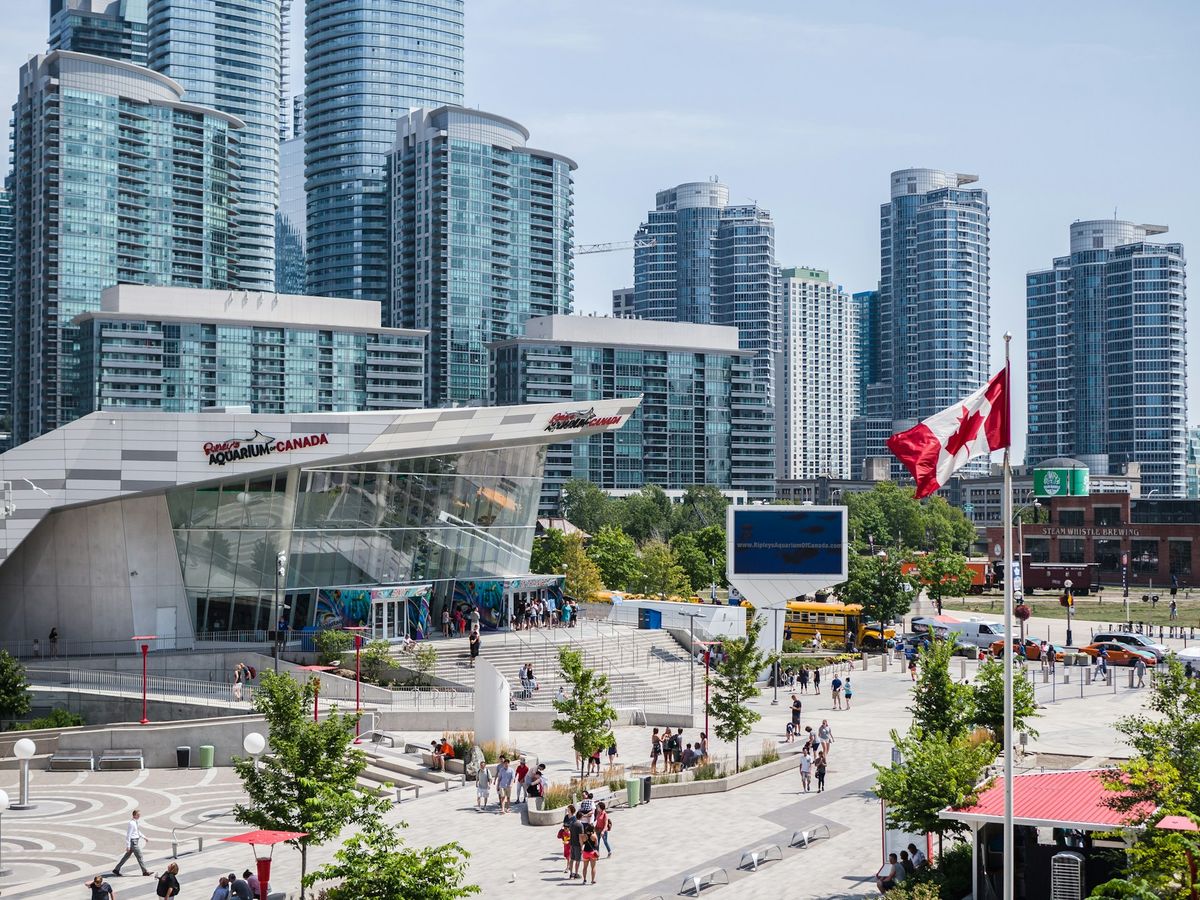
Toronto, Ontario, Kanada by Mauro-Fabio Cilurzo, Unsplash
Housing: the practical constraint
The biggest reality check for many newcomers is housing.
Canada's housing pressures have become a national issue, particularly in the major arrival cities. Toronto and Vancouver were already difficult markets before the pandemic; affordability then deteriorated more broadly across Canada. CMHC has argued that housing starts would need to double over the next decade to meet demographic demand. cmhc-schl.gc
There are signs of a partial rental-market adjustment:
- The national purpose-built rental vacancy rate rose from 2.2% to 3.1% in 2025.
- Slower population growth, fewer international-student arrivals and record rental completions have helped loosen conditions in some markets.
- Yet affordability remains difficult, especially for lower-priced homes and apartments.
- Montréal and Halifax continue to face affordability pressure, while Calgary and Vancouver have seen stronger supply growth and some early signs of relief in high-cost segments. cmhc-schl.gc
The important distinction is between availability and affordability. A market can have more vacant apartments than a year earlier and still be too expensive for a newly arrived person without Canadian credit history, local employment references or a high income.
For many expats, the initial months may involve shared accommodation, furnished short-term housing or co-living rather than immediately renting a private apartment in a central neighbourhood. CMHC specifically notes that recent arrivals may share flats or double up because living alone is unaffordable. cmhc-schl.gc
Lifestyle fit is more than rent and salary
A lower rent does not automatically create a better relocation outcome. The right location depends on the balance between employment security, housing, climate, community and the everyday infrastructure you rely on.
| Relocation priority | Often stronger fit | Important trade-off |
|---|---|---|
| International jobs, professional networks and diversity | Toronto, Vancouver, Montréal | Higher housing costs and more competitive rental markets |
| More space and a calmer mid-sized city lifestyle | Saskatoon, Regina, Winnipeg, Edmonton | Smaller specialist job market; harsher winter conditions |
| Mountains, forests, ocean and outdoor culture | Vancouver Island, Lower Mainland, Interior British Columbia | High costs in popular locations; fewer services outside major centres |
| French-speaking culture and technology or creative work | Montréal, Québec City | French ability affects integration and long-term career flexibility |
| Smaller-city community with maritime access | Halifax, Moncton, St. John's | Smaller labour markets and less housing slack than many newcomers expect |
| Remote or specialised resource-sector work | Northern provinces and territories, northern Saskatchewan, Alberta | Geographic isolation, expensive logistics and demanding weather |
The expat mistake is to see “more affordable than Toronto” as a sufficient reason to choose a Prairie city, or “beautiful nature” as a sufficient reason to choose a small coastal community. A move works best when the local economy and daily rhythm also match the person's career, social needs and tolerance for climate.
For example, a remote software professional may find Saskatoon attractive if they value a quieter life, can work independently and enjoy outdoor recreation. But the same person may prefer Victoria or Vancouver Island if ocean access and a milder climate matter more—provided they have a realistic housing budget and do not depend on a large local employer market.
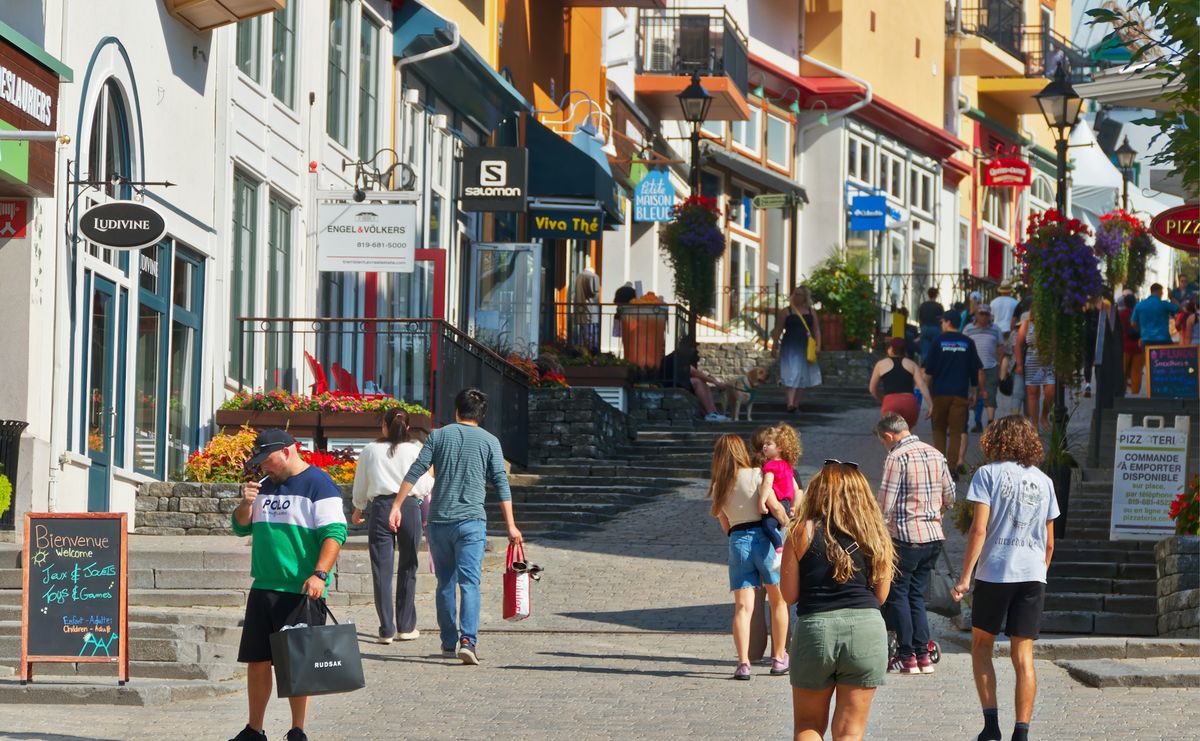
Mont-Tremblant, QC, Canada by Pascal Bernardon, Unsplash
What this means for expats
Canada can still be an excellent choice—but it rewards preparation, not optimism alone.
1. Choose a city before choosing the country
A software developer, designer, researcher, healthcare worker, tradesperson or remote entrepreneur will experience Canada very differently depending on location.
Toronto offers scale, corporate jobs, international networks and diversity—but also high living costs and competitive housing. Montréal can be a strong fit for technology, AI, culture and creative industries, especially for people who can work in French or are willing to learn. Calgary often appeals to people seeking stronger purchasing power than Vancouver or Toronto, while Halifax may suit those prioritising lifestyle and smaller-city community over the breadth of a major metropolitan labour market.
For remote workers, the question is not only “Where is rent cheaper?” Consider:
- Time-zone overlap with clients or employers
- Provincial healthcare eligibility and waiting rules
- Tax residency and corporate structure
- Winter climate and transport
- Local airport connectivity
- French-language expectations in Québec
- Availability of long-term rental housing
- Access to professional networks and future employment options
2. Treat immigration as a multi-stage project
A realistic plan distinguishes between:
- Temporary residence: study permits, work permits, working-holiday routes where eligible, employer-linked permits or other temporary programs
- Permanent residence: federal economic programs, family pathways, provincial nomination streams and other qualifying routes
- Settlement readiness: proof of funds, language results, credential recognition, job search, housing, health insurance and local documentation
The central question is not “Can I enter Canada?” It is: What legal status will I have in 12, 24 and 36 months—and what events could disrupt that plan?
That question has become more important because Canada is reducing new temporary-resident arrivals while keeping permanent-resident admissions comparatively stable. A profile that aligns with a permanent-residence route, provincial labour need or credible employer demand is generally more resilient than a plan based on arriving temporarily and hoping the rules remain favourable. canada
3. Build a larger financial runway
A move to Canada often costs more upfront than newcomers expect. Typical early expenses can include:
- Flights and temporary accommodation
- Rent deposits and advance rent
- Furniture and household setup
- Winter clothing, depending on region
- Car-related costs outside the largest cities
- Licensing or credential assessments
- Private insurance during eligibility gaps
- Higher-than-expected food, mobile and transport costs
- A credit-history gap that affects renting, financing and mobile contracts
A sensible expat plan should model at least several months of costs without relying on immediate local income. The correct buffer depends heavily on city, household size, visa category and whether an employer pays relocation costs.
4. Do not underestimate language
English is essential outside Québec, and French can materially change both integration and opportunity in Québec.
Montréal is internationally oriented and many workplaces use English, particularly in technology and research. Still, French affects daily administration, local social integration and the breadth of long-term career options. In other provinces, French may be less necessary for everyday life, but bilingual ability can remain valuable in federal institutions, nationally operating companies and parts of the public sector.
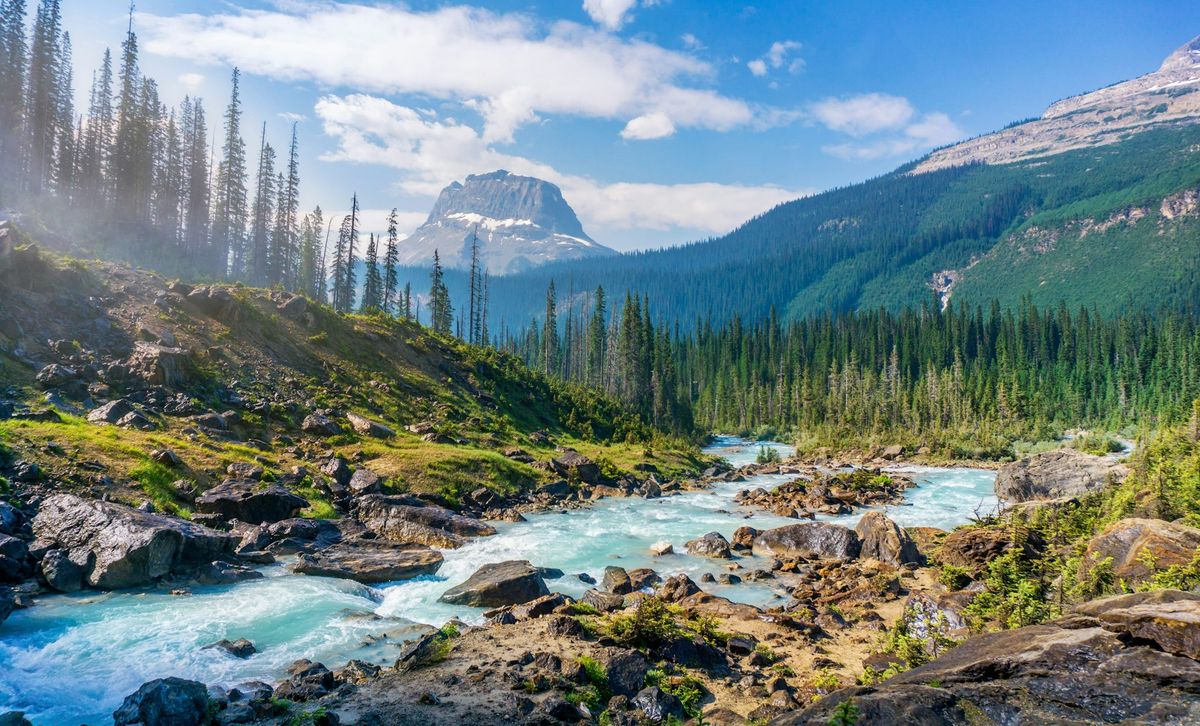
Yoho National Park, Field, Canada by Hendrik Cornelissen, Unsplash
5. Expect a diverse, immigrant-shaped society
Canada's diversity is not a marketing slogan detached from reality. Immigrants account for around 23% of the population, and the federal government notes that immigrants account for approximately half of STEM degree holders in Canada. canada
For skilled expats, this has two sides:
- You may find internationally experienced colleagues, multicultural communities and well-developed newcomer services.
- You will also compete with a large pool of talented international candidates, especially in Toronto, Vancouver and parts of the technology sector.
The quality of your local network, portfolio, language ability, employment status and city choice can be more decisive than simply possessing an internationally recognised degree.
The emotional reality of moving there
Canada can feel easy to idealise from abroad because it offers so much of what people associate with a high-quality life: safety, natural beauty, multicultural cities, access to space and an English-speaking environment.
Yet settlement is built in ordinary moments, not in national branding:
- Can you find an apartment without Canadian credit history?
- Will the local job market support your skills if a remote role ends?
- Can you handle several months of cold, darkness, rain or snow?
- Does your chosen city offer friendships, hobbies, cafés, sports and cultural life outside work?
- Can you access a doctor, groceries, transport and an airport without a long drive?
- Are you choosing a place because it fits your life—or because its landscape looks good online?
For many people, Canada's regional diversity is the opportunity. You can choose between global-city intensity, French-speaking urban culture, Prairie space, Atlantic community and Pacific-coast outdoor life. The risk is assuming those places offer interchangeable versions of the same Canadian dream.
They do not. The climate, social rhythm, career options and practical conveniences change sharply from one province—and often one city—to the next. reddit
Is Canada still worth it?
For many people, yes—but not for the same reasons or under the same assumptions as five years ago.
Canada remains attractive if you value:
- A stable liberal democracy and predictable institutions
- A multicultural society with established immigrant communities
- Access to nature, outdoor life and lower-density living outside the largest metros
- English-speaking professional opportunities, plus French-speaking opportunities in Québec
- Strong universities, research ecosystems and technology clusters
- A long-term lifestyle choice rather than a purely short-term income maximisation move
It may be a harder fit if you need:
- Immediate access to low-cost housing in a major global city
- An uncomplicated student-to-work-to-permanent-residence route
- Fast specialist healthcare access without navigating provincial systems
- European-style intercity rail density and compact urban life
- A move with little financial reserve or no credible work/visa plan
The best Canada strategy in 2026 is selective rather than generic. Match your immigration path to a specific province, your professional profile to a real local market, and your lifestyle expectations to a neighbourhood—not merely a country-level dream.
Final thought
Canada remains one of the world's most attractive destinations for people seeking long-term stability, multicultural communities, outdoor access and professional opportunity. But the country's population growth has made relocation more demanding: housing is tighter, immigration pathways are being recalibrated and the most popular cities can no longer be approached casually.
The most successful expat move is therefore not a decision to “go to Canada.” It is a decision to build a viable life in a particular Canadian place.
For one person, that may be Montréal's bilingual technology and culture scene. For another, Calgary's economic opportunity and access to the Rockies. For someone else, it may be Saskatoon's lower-density pace and lake country, or Victoria's coastal lifestyle. Each choice comes with a different set of compromises around weather, work, housing, services and community.
Canada still rewards people who prepare carefully. The key is to choose for the life you will live every Tuesday in November—not only for the postcard version of summer. reddit
Research note: This article reflects publicly available demographic, housing and immigration-policy information available as of September 2026. Immigration rules, program eligibility, provincial nomination streams, processing practices and housing conditions can change quickly. Verify requirements directly with Immigration, Refugees and Citizenship Canada, the relevant provincial authority and qualified regulated immigration professionals before making financial or legal decisions.


