
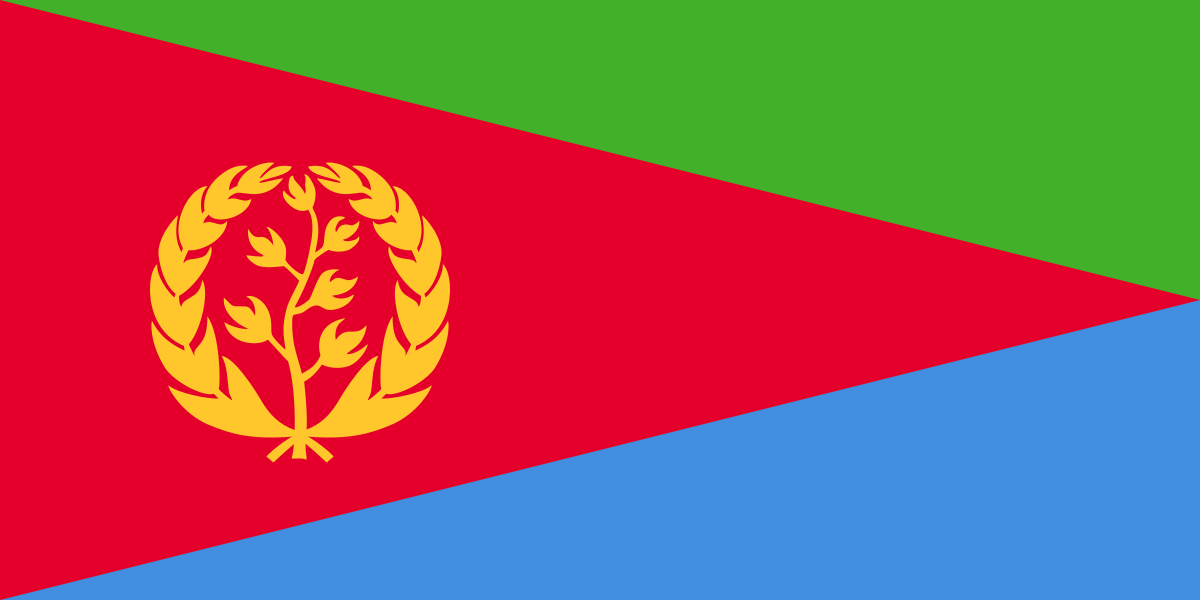
 Politics & Government Guide · Eritrea
Politics & Government Guide in Eritrea
Political system, governance structure, stability indicators, and democratic institutions
Eritrea is a single-party presidential republic under the totalitarian rule of President Isaias Afwerki and the PFDJ since independence in 1993. No national elections have been held since 1993, the constitution ratified in 1997 remains unimplemented, and the National Assembly has not met since 2002. The regime maintains strict control over all aspects of society, with severe restrictions on freedoms, ongoing human rights abuses, and no legal opposition parties.
Political Stability
Poor
Corruption Index
Poor
Democracy Index
Poor
Government Type
Presidential republic
Legal System
Civil law system influenced by Italian colonial law and customary law
Head of State
President Isaias Afwerki(since 1993)
Head of Government
President Isaias Afwerki(People's Front for Democracy and Justice)since 1993
Political Indicators
Political Stability
Scale: 0-100
Not free
Freedom House (2025)
Corruption Index
Scale: 0-100
Transparency International (2024)
Press Freedom
Scale: 0-100
Reporters Without Borders (2025)
Democracy Index
Scale: 0-10
Authoritarian regime
Economist Intelligence Unit (2024)
Legislature
Major Political Parties
Left-wing
Voting Rights
Citizens aged 18 and over; no elections held since 1993
Recent Developments
- Continued indefinite national service and forced labor reported in 2024-2025
- Eritrean forces remained in Ethiopia's Tigray region committing abuses through 2024
- No elections or National Assembly meetings since 2002 as of 2025
More Insights for your Move to Eritrea
Comprehensive guides and data-driven analysis.
Budget & Expenses
Is your lifestyle affordable? From grocery prices to utility bills, see how costs compare to your home.
Read guideHealthcare
Navigate the healthcare system, insurance options, and medical access as an expat or digital nomad.
Read guideEconomy
Explore the economic landscape, job market trends, income levels, and financial outlook for expats.
Read guide