
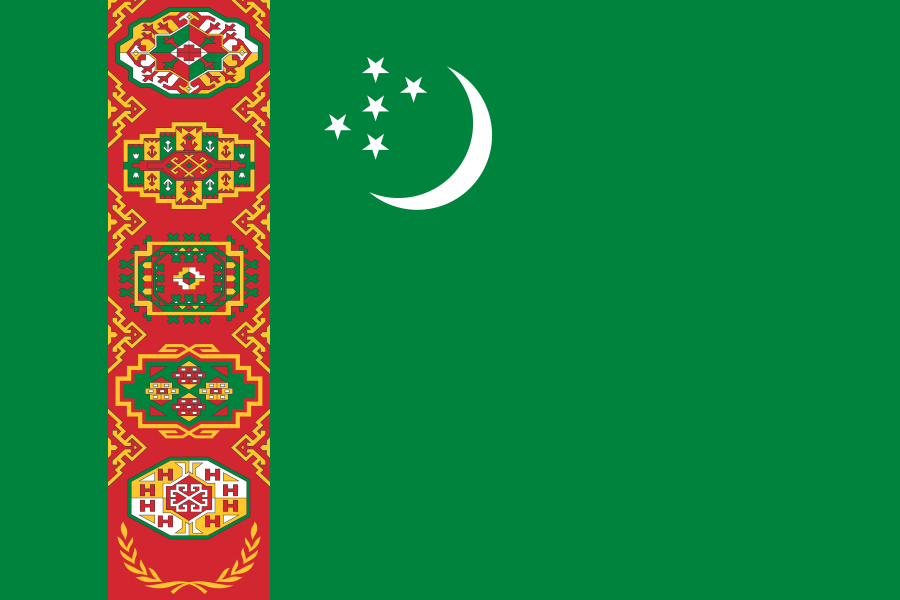
 Long-term Expat Guide · Turkmenistan
Long-term Expat Guide in Turkmenistan
Visa & residency pathways, tax obligations, and healthcare access for long-term expats
Long-term Expat Guide for Turkmenistan
Relocating to Turkmenistan as a foreigner involves navigating a highly regulated and often complex visa and residency system. The country maintains strict control over entry and stay, making thorough preparation essential.
- Visa-Free Entry and Tourist Stay Limits: Turkmenistan has very limited visa-free entry agreements. Citizens of most major passport-holding countries (e.g., EU, US, UK, Canada, Australia) do not have visa-free entry for tourism or business purposes. A visa is almost always required in advance. For the few CIS countries with visa-free agreements, specific conditions and duration limits apply, and an invitation may still be necessary for longer stays.
- Tourist Visas: To obtain a tourist visa, an official invitation letter from a registered Turkmen travel agency or a resident is mandatory. Tourist visas typically allow stays from 10 days up to 3 months.
- Temporary Residency Tracks:
- Work Visas/Permits: This is the most common route for long-term expats. An employer in Turkmenistan must first obtain a permit to hire foreign labor from the Ministry of Labor and Social Protection of Turkmenistan. Once this authorization is secured, the individual can apply for a work visa at a Turkmen embassy or consulate. This is a multi-stage process that can be lengthy.
- Study Visas: Issued to foreign nationals admitted to accredited educational institutions in Turkmenistan. An official invitation letter from the educational institution is required.
- Family Reunion/Dependent Visas: Available for immediate family members (spouses and minor children) of foreign nationals who hold valid work or study visas/residency permits in Turkmenistan. Proof of relationship (marriage/birth certificates) and the primary applicant's legal status and financial capacity are required.
- Investment Visas: Turkmenistan does not have a specific 'golden visa' or direct investment-for-residency program. Foreign investors typically obtain residency through a work permit if they are actively managing a business or through a business visa for specific projects.
- Permanent Residency: Obtaining permanent residency in Turkmenistan is exceptionally difficult for foreigners. It generally requires a significant period of continuous legal residence (often 5 years or more) under specific circumstances, such as marriage to a Turkmen citizen, being a highly skilled professional, or making substantial contributions to the country. The process is highly discretionary and opaque.
- Citizenship: Turkmen citizenship is rarely granted to foreigners. Requirements typically include a prolonged period of continuous legal residency (often 7 years or more), renunciation of previous citizenship (Turkmenistan generally does not recognize dual citizenship), proficiency in the Turkmen language, and demonstrated integration into society. It is an arduous and lengthy process.
- Work Permits and Employment Authorisation for Foreigners: As noted, an employer must secure a permit to hire foreign labor from the Ministry of Labor and Social Protection. This permit is a prerequisite for the individual to apply for a work visa. The State Migration Service of Turkmenistan then processes the visa and subsequent residency permit.
- Digital Nomad or Remote Worker Visa Programmes: As of May 2026, Turkmenistan does not offer any digital nomad or remote worker visa programmes. Given the country's strict entry policies and internet regulations, such a program is highly unlikely to be introduced in the near future.
- Student Visas: Requires an official invitation from a Turkmen educational institution. The institution usually assists with the visa application process.
- Family Reunion and Dependent Visas: For immediate family members (spouse, minor children) of foreign nationals holding valid work or study visas/residency permits. Documentation includes marriage/birth certificates, and proof of the primary applicant's status and financial means.
- Application Process:
- Where to Apply: Generally, applications are submitted at a Turkmenistan Embassy or Consulate in the applicant's home country or country of legal residence. In limited cases, with a pre-arranged invitation, visas can be obtained upon arrival at Ashgabat International Airport.
- Documentation: Varies by visa type but commonly includes:
- Valid passport (at least 6 months validity beyond intended stay).
- Completed visa application form.
- Passport-sized photos.
- Official invitation letter (from a government agency, company, educational institution, or travel agency).
- Letter from employer (for work visa).
- Marriage/birth certificates (for family reunion).
- HIV test certificate (often required).
- Proof of sufficient funds.
- Travel insurance (highly recommended).
- Fees: Visa fees vary by nationality, visa type, and duration. Single-entry visas typically range from $50-$150 USD, with higher fees for multiple-entry or longer stays. Fees are subject to change and should be confirmed with the relevant embassy/consulate.
- Timelines: Visa processing can take 2-4 weeks, but complex cases (e.g., work permits, residency) may extend to several months. Expedited processing may be available for an additional fee.
- Renewal Procedures: Temporary residency permits and visas must be renewed before their expiry date through the State Migration Service of Turkmenistan. The renewal process typically requires updated documentation, justification for continued stay, and payment of relevant fees.
- Common Pitfalls and Refusal Reasons:
- Lack of a valid, officially approved invitation letter.
- Incomplete, incorrect, or fraudulent documentation.
- Failure to meet financial requirements.
- Previous immigration violations or overstaying a visa.
- Security concerns or adverse background checks.
- Changes in government policy or discretionary decisions by immigration authorities.
It is highly advisable to consult with the nearest Turkmen embassy or consulate, or a reputable local immigration lawyer in Turkmenistan, for the most current and specific requirements.
Understanding tax obligations in Turkmenistan is crucial for any foreigner planning a long-term stay. The tax system is relatively straightforward but requires careful attention to ensure compliance.
- Tax Residency Rules: A foreigner generally becomes a tax resident in Turkmenistan if they spend 183 days or more within the country during any 12-month period. Tax residents are taxed on their worldwide income, while non-residents are taxed only on income sourced within Turkmenistan.
- Income Tax Rates and Brackets for Residents vs Non-Residents: Turkmenistan applies a flat tax rate for personal income. The standard Personal Income Tax (PIT) rate is 10% for both residents and non-residents. This rate applies to salaries, wages, and most other forms of income. There are generally no progressive tax brackets for individuals.
- Double Taxation Treaties (DTTs): Turkmenistan has signed Double Taxation Treaties with numerous countries to prevent individuals from being taxed twice on the same income. Key countries with active DTTs include (but are not limited to): Austria, Belarus, Belgium, China, France, Germany, India, Iran, Kazakhstan, Korea (Republic of), Kuwait, Latvia, Lithuania, Malaysia, Netherlands, Pakistan, Romania, Russia, Slovakia, Turkey, UAE, UK, Ukraine, Uzbekistan, and Vietnam. Expats should consult the specific DTT between Turkmenistan and their home country to understand its implications for their tax situation.
- Social Security and Pension Contributions for Foreigners: Foreigners legally employed in Turkmenistan are generally subject to social security contributions. These contributions are typically withheld by the employer from the employee's salary and remitted to the state. Employer contributions can be significant (e.g., around 20-25% of the employee's salary for social insurance), with a smaller percentage potentially contributed by the employee. These contributions cover state pension, temporary disability, and other social benefits, though the portability or accessibility of these benefits for foreigners upon leaving Turkmenistan can be limited.
- Tax Filing Requirements, Deadlines, and How to File:
- For employed individuals, personal income tax is usually withheld at source by the employer (Pay-As-You-Earn system), meaning the employer handles the calculation and remittance.
- Individuals with other sources of income (e.g., rental income, capital gains not subject to withholding) may be required to file an annual tax declaration.
- The tax year in Turkmenistan aligns with the calendar year (January 1 to December 31).
- Filing Deadline: Annual tax declarations are typically due by March 1 of the year following the tax year.
- How to File: Declarations are submitted to the local offices of the State Tax Service of Turkmenistan.
- Tax Deductions and Allowances Available to Expats: Deductions and allowances in Turkmenistan's flat-tax system are generally limited. While some standard deductions may exist for certain categories (e.g., dependents, specific social contributions), these are often minimal and primarily apply to residents. Expats should not expect significant tax relief through deductions.
- Property Ownership Tax for Foreigners: Direct land ownership by foreigners is generally restricted in Turkmenistan. However, foreigners can own property (e.g., apartments) often through long-term lease agreements for the land component. Property tax (real estate tax) is levied on property owners based on the cadastral value of the property. Rates are generally low.
- Capital Gains Tax: Capital gains derived from the sale of property or other assets are typically subject to the standard 10% personal income tax rate.
- VAT and Other Indirect Taxes Affecting Daily Life:
- Value Added Tax (VAT): The standard VAT rate in Turkmenistan is 15%, applied to most goods and services, impacting daily living costs for expats.
- Excise Taxes: Levied on specific goods like alcohol, tobacco, and petroleum products.
- Customs Duties: Apply to imported goods.
- Wealth or Net Worth Taxes: Turkmenistan does not impose a wealth or net worth tax on individuals.
- When to Engage a Local Tax Advisor: It is highly recommended for expats to engage a local tax advisor or legal professional in Turkmenistan, especially for:
- Interpreting double taxation treaties and their impact on foreign income.
- Navigating complex income streams, business ownership, or significant investments.
- Ensuring full compliance with local tax laws, which can be subject to change and local interpretation.
- Understanding social security obligations and potential benefits.
- Penalties for Non-Compliance: Penalties for non-compliance with tax obligations can include significant fines, interest charges on underpaid taxes, and in severe cases, legal prosecution. Strict adherence to filing deadlines and payment obligations is crucial to avoid issues with the State Tax Service.
Turkmenistan's healthcare system is primarily state-funded, aiming to provide universal access to its citizens. However, for foreigners, particularly long-term expats, understanding the nuances and limitations is vital for ensuring adequate medical care.
- Healthcare System Overview: Public vs Private, How it is Funded: The healthcare system is largely centralized and managed by the Ministry of Health and Medical Industry of Turkmenistan. It is predominantly state-funded through the national budget. While public healthcare is theoretically accessible, its quality, resources, and infrastructure can vary significantly, especially outside the capital, Ashgabat. Private healthcare options are limited but growing, particularly in Ashgabat, offering higher standards of care, more modern equipment, and often English-speaking medical staff. These private facilities are typically the preferred choice for expats.
- Access Rights for Foreigners (Tourists vs Residents vs Workers):
- Tourists: Generally have access to emergency medical services, but are expected to cover costs out-of-pocket or through travel insurance. Routine care is not typically covered by the public system.
- Legal Residents/Workers: Foreigners with valid residency permits or work visas may have some access to the public healthcare system, similar to citizens. However, this often requires formal registration, can be bureaucratic, and may involve language barriers. Due to perceived differences in quality and ease of access, many expats choose to rely solely on private care.
- Health Insurance: What is Required, What Public Coverage Covers:
- Required: While not always strictly mandated for visa applications, comprehensive international private health insurance is strongly recommended and often essential for all foreigners in Turkmenistan. The public system may not meet the standards or cover the full range of services expats might expect.
- Public Coverage: For those who successfully register, public coverage typically includes basic medical consultations, hospital stays, and some essential medications. However, access to specialized treatments, advanced diagnostics, and certain imported medications might be limited or require additional payments.
- How to Register with the Public Healthcare System as a Foreigner: Registration typically involves presenting your passport, visa, and residency permit to a local polyclinic or health center. You may be assigned a general practitioner. The process can be bureaucratic, and assistance from an employer or local contact is often beneficial due to potential language barriers and administrative complexities.
- Private Health Insurance: Recommended Providers, Typical Costs:
- Recommended Providers: There are no major local private health insurance providers specifically for expats. Expats typically rely on international health insurance providers such as Cigna Global, Allianz Care, Bupa Global, Aetna International, or GeoBlue.
- Typical Costs: Costs vary significantly based on age, desired level of coverage, and chosen provider. For a comprehensive international plan, expats can expect to pay anywhere from $3,000 to $10,000+ USD per year (as of May 2026). Basic plans may be cheaper but might have higher deductibles or limited coverage.
- Quality of Public vs Private Care in Practice:
- Public Care: Can be basic, with older facilities, limited modern equipment, and potential shortages of specialized staff and medications, particularly outside Ashgabat. Language barriers are common.
- Private Care: Generally offers a higher standard, with newer facilities, more advanced equipment, and often English-speaking doctors. These clinics are predominantly located in Ashgabat. For serious or complex medical conditions, medical evacuation to a neighboring country (e.g., Turkey, UAE) or Europe is often recommended by embassies and international organizations.
- Emergency Services: How to Access, What to Expect:
- Emergency Number: The general emergency number for an ambulance is 03.
- What to Expect: Public ambulance services may be slow or lack advanced medical equipment. For critical emergencies, expats in Ashgabat may prefer to arrange private transport directly to a private clinic if feasible. Be prepared for potential language barriers and ensure your private insurance covers emergency services and potential medical evacuation.
- Prescription Medications: Availability, Cost, How to Obtain:
- Availability: Basic medications are generally available in pharmacies, especially in Ashgabat. However, specialized or imported medications might be scarce or unavailable.
- Cost: Costs can vary. Some medications might be cheaper than in Western countries, while imported ones can be expensive.
- How to Obtain: A prescription from a local doctor (public or private) is usually required. It is highly advisable to bring a sufficient supply of any critical prescription medications from your home country, along with a doctor's note, as local availability cannot be guaranteed.
- Dental and Vision Care: Public Coverage vs Out-of-Pocket:
- Public Coverage: Basic dental and vision care might be available through the public system, but the quality can be variable.
- Out-of-Pocket/Private: Most expats opt for private dental and vision clinics, particularly in Ashgabat, for higher quality services. These are typically paid for out-of-pocket or covered by comprehensive private health insurance plans (if included).
- Mental Health Services Available to Expats: Mental health services are generally underdeveloped in Turkmenistan. Public services are unlikely to cater to expat needs due to language, cultural differences, and limited resources. Expats may find very limited private psychological or psychiatric support, primarily in Ashgabat. Telehealth services from international providers are often the most practical option for ongoing mental health support.
- Maternity Care and Childbirth Options: Public maternity hospitals are available, but standards can vary. Some private clinics in Ashgabat may offer maternity services, potentially providing a more comfortable and higher-quality experience. Many expats consider returning to their home country or a regional medical hub for childbirth due to concerns about local facilities and post-natal care.
- Vaccinations and Travel Health Requirements:
- Routine Vaccinations: Ensure all routine vaccinations (e.g., MMR, DPT, Polio) are up-to-date.
- Recommended Vaccinations: Typhoid, Hepatitis A, Hepatitis B, and Rabies are often recommended, especially for those planning extended stays or travel to rural areas.
- COVID-19: Check current entry requirements regarding COVID-19 vaccination or testing, as these can change rapidly.
- Medical Certificate: A medical certificate stating you are HIV-negative is often required for long-term visas and residency permits. Consult with a travel health specialist well in advance of your relocation to discuss specific vaccination needs and health precautions.
More Insights for your Move to Turkmenistan
Comprehensive guides and data-driven analysis.
Budget & Expenses
Is your lifestyle affordable? From grocery prices to utility bills, see how costs compare to your home.
Read guideSchools & Family
Finding the right school is a priority. Compare international schools and curriculum standards.
Read guideTransportation
How do you get around? Public transit coverage, airports, and infrastructure quality at a glance.
Read guide