
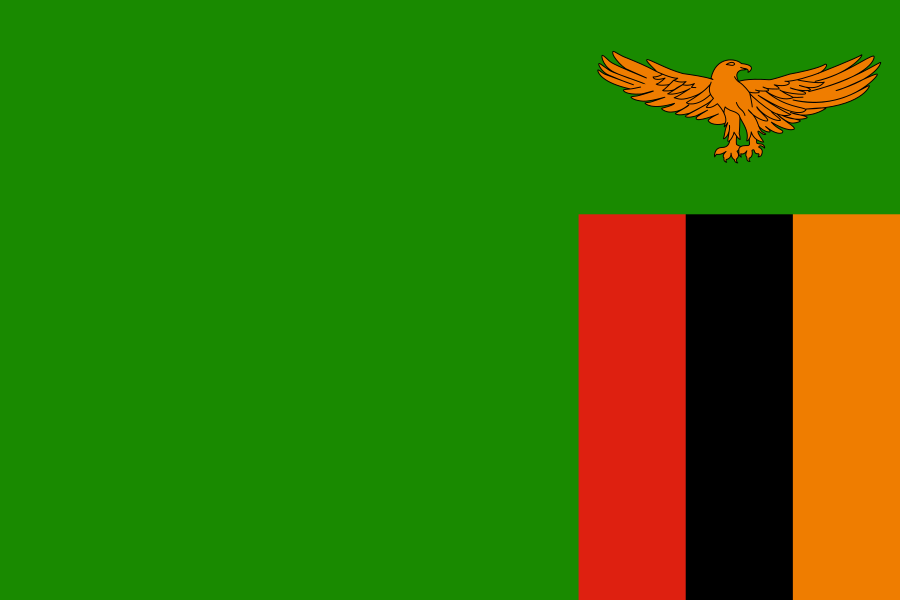
 Healthcare System Guide · Zambia
Healthcare System Guide in Zambia
Healthcare system, insurance options, and medical access for expats
Expats in Zambia should prioritize securing comprehensive private or international health insurance, including medical evacuation, due to varying healthcare standards and limited public access for foreigners.
- Zambia operates a dual healthcare system with both public and private sectors, but public facilities often face resource limitations, especially in rural areas.
- Foreigners and expats are generally not covered by Zambia's public National Health Insurance Scheme (NHIS) upon arrival and are strongly advised to secure private or international health insurance.
- Expats employed in Zambia may be required to register with the National Health Insurance Management Authority (NHIMA) and can access public services after a four-month waiting period.
- Private healthcare facilities, primarily located in major cities like Lusaka, offer higher quality care, shorter waiting times, and better equipment, but come at a significantly higher cost.
- Emergency services are available, but response times and resources can be limited outside urban centers, making comprehensive medical evacuation insurance essential for all expats.
- Healthcare quality in Zambia is generally below Western standards, with a reported quality index of 38/100, necessitating careful planning for serious medical conditions.
- Upfront cash payment is often expected for medical services, particularly in private facilities and for emergency care, even with insurance.
- The Zambian government is implementing the 2022-2026 National Health Strategic Plan to improve healthcare accessibility and quality.
01Navigating Zambia's Healthcare Landscape
Zambia's healthcare system is overseen by the Ministry of Health and operates with a mix of public and private facilities. The public sector aims to provide universal healthcare coverage to its citizens, primarily funded through government taxation and health insurance contributions. However, public facilities, particularly in rural areas, often face challenges such as understaffing, limited medical supplies, and outdated infrastructure. To address these issues, the Zambian government is implementing the 2022-2026 National Health Strategic Plan, focusing on strengthening health systems and improving accessibility. The private healthcare sector, concentrated in major urban centers like Lusaka, offers a higher standard of care, modern equipment, and shorter waiting times, catering largely to those who can afford it, including expats. Expats generally find that private facilities align more closely with international standards. For any serious medical conditions or complex treatments, medical evacuation to South Africa or other countries is often recommended.
02Understanding Zambia's Public Health System
Zambia's public healthcare system is structured into three levels: primary, secondary, and tertiary care. Primary care services, which are the first point of contact for medical treatment and include diagnosis of common illnesses and chronic condition management, have been free for patients since 2021. Secondary care is provided at district hospitals, often requiring a referral for more specialized treatment. Tertiary care, the highest level, is offered at teaching hospitals in major cities for complex and severe conditions.
For employed residents, including expats with a residence permit and employment, registration with the National Health Insurance Management Authority (NHIMA) is mandatory. Employees contribute 1% of their income towards state healthcare, and employers are responsible for registering them within 30 days of employment. Expats can access NHIMA-accredited public healthcare services approximately four months after registration.
Despite these provisions, the public system is often stretched, leading to long waiting times for non-urgent procedures and a lack of choice in providers. Facilities can be under-resourced, with shortages of medical professionals, equipment, and essential medicines, particularly outside urban areas.
03Exploring Private Medical Options in Zambia
Private healthcare in Zambia offers a significantly higher standard of medical care compared to the public system, featuring better-equipped facilities, more specialized services, and shorter waiting times. These private hospitals and clinics are predominantly found in major cities such as Lusaka and Ndola.
Recommended Private Hospital Networks:
- Medland Hospital (Lusaka): Established in 2019, offers specialized and comprehensive medical services with international standards.
- Wellspring Specialty Hospital (Lusaka): Known for advanced medical technology and experienced professionals, including specialized surgeries.
- International Hospital of Zambia (Lusaka): Provides patient-centered medical care with experienced doctors and modern facilities.
- Fairview Hospital (Lusaka): Leads in orthopedics and women's health, with high patient satisfaction.
- Lusaka Trust Hospital: Offers VIP and expat programs with quick admissions and English-speaking consultations.
- Corpmed Clinic (Lusaka): Features a modern trauma center, its own ambulance service, and a 24-hour doctor on duty.
Typical consultation and procedure costs in private facilities are considerably higher than in the public sector, and upfront cash payment is often expected. While specific cost figures were not consistently available, expats should anticipate expenses comparable to or higher than those in some Western countries for complex procedures, especially if medical evacuation is required.
04Healthcare Access for Foreigners and Expats
Foreigners and expats in Zambia have different healthcare access rights depending on their residency and employment status. Tourists are generally expected to rely on private travel medical insurance. For those residing and working in Zambia, the situation is more nuanced.
While the National Health Insurance Scheme (NHIS), managed by NHIMA, is designed for Zambian citizens, expats in permanent employment are required to register with NHIMA. After registration by their employer and a waiting period of approximately four months, expats can access services at NHIMA-accredited public facilities. However, due to the limitations of the public system, most expats are strongly advised to secure private health insurance, either local or international, to ensure access to higher quality care and shorter waiting times.
Crucially, medical evacuation coverage is considered essential for all expats in Zambia. This is because major medical emergencies or specialized treatments often necessitate transfer to facilities in South Africa or other countries, and the costs associated with such evacuations can be monumental. There are no widely recognized reciprocal health agreements between Zambia and Western countries.
05Health Insurance for Your Stay in Zambia
Expats in Zambia have several options for health insurance, with private coverage being highly recommended due to the quality and accessibility challenges of the public system.
- National Health Insurance Management Authority (NHIMA): Mandatory for employed residents, including expats, who contribute 1% of their income. Access to accredited public facilities is granted after a four-month waiting period.
- Local Private Insurance: These plans provide coverage within Zambia and can be more cost-effective than international options. However, they may have stricter coverage limits and access to treatment might be restricted to specific local networks.
- International Health Insurance: This is the most recommended option for expats, offering comprehensive coverage, access to a wider network of medical facilities both within Zambia (private) and globally, and crucial medical evacuation benefits. Reputable international providers include Cigna, AXA, Bupa Global, and NOW Health International. Typical monthly premiums for international plans can vary significantly based on coverage level, age, and medical history, but generally represent a substantial investment.
- Employer-Provided Plans: Some employers in Zambia may offer private health insurance as part of their benefits package. Expats should thoroughly review the coverage details, especially regarding medical evacuation and international treatment options.
When choosing a plan, it is paramount to ensure it includes robust medical evacuation coverage, as this is vital for serious conditions requiring treatment outside Zambia. Travel insurance is also recommended for visitors, with policies often including emergency medical and evacuation benefits.
06Typical Healthcare Costs in Zambia
Healthcare costs in Zambia vary significantly between the public and private sectors. While primary care services in public facilities have been free for patients since 2021, other public services may involve cost-sharing or specific fees.
In the private sector, costs are considerably higher, and patients are generally expected to make upfront cash payments for services.
- GP Visits: A private general practitioner consultation can range from approximately ZMW 300-700 (around €15-35 / USD 16-38), though specific recent data is limited.
- Specialist Consultations: These will be significantly higher, potentially starting from ZMW 800-1,500+ (around €40-75 / USD 43-80+).
- Hospital Stays and Procedures: Private hospital stays, surgeries, and complex procedures can incur substantial costs, often requiring deposits or full payment upfront. For instance, a kidney transplant was performed in Zambia in 2018 in association with the Ministry of Health, indicating the presence of advanced procedures, but also implying high costs in private settings.
- Prescriptions: Medication costs vary. While some basic medications might be available in public pharmacies, private pharmacies will stock a wider range at higher prices. Expats are advised to bring a supply of essential prescription drugs with a doctor's letter.
- Dental and Vision Care: Basic dental care may be partially covered by public insurance, but major dental work and vision care typically require supplemental private insurance.
- Medical Evacuation: The cost of medical evacuation is monumental, often ranging from tens of thousands to hundreds of thousands of US dollars, underscoring the necessity of comprehensive insurance.
07Emergency Medical Services in Zambia
Emergency medical services in Zambia are available but can be limited in terms of rapid response and resources, especially outside major urban areas. The main emergency number is 999, which can be used for general emergencies including ambulance, police, and fire services. Other specific numbers include 991 for Ambulance and Police, and 993 for Fire Brigade. However, reports indicate that these short codes may not always be reliable or accessible, with some only working on specific networks.
Private emergency medical services like Specialty Emergency Services (SES), Zambulance Health Services, and the Zambia Flying Doctor Service (ZFDS) offer more advanced and reliable ambulance and medical evacuation services. SES is highlighted as Zambia's leading country-wide emergency medical support service. These private services are highly recommended for expats and often require prior registration or direct payment.
In a life-threatening emergency, it is advisable to go directly to the nearest hospital emergency department. Public hospital emergency departments cannot refuse treatment. However, for serious injuries or illnesses, medical evacuation to South Africa or other countries is frequently necessary due to limited specialized care and equipment. It is crucial for foreigners to carry their insurance card and a translated summary of any medical conditions or allergies, as upfront cash payment is often expected for emergency services, even with insurance.
08Assessing Healthcare Quality in Zambia
The overall quality of healthcare in Zambia is generally considered to be below the standards typically found in Western countries, with a reported Healthcare Quality Index of 38/100.
Strengths:
- Private Sector: Private hospitals in major cities like Lusaka offer significantly better facilities, modern equipment, and a higher standard of care, often comparable to regional international standards. Some private facilities, such as Wellspring Specialty Hospital, are bringing in advanced medical technology and expertise.
- Government Initiatives: The Ministry of Health is actively working to improve the system through the 2022-2026 National Health Strategic Plan, focusing on strengthening health systems and increasing accessibility.
- Specialty Growth: There is growth in specialties like cardiology, orthopedic surgery, and oncology, with teaching hospitals combining research and practice.
Weaknesses:
- Underfunding and Resources: The public healthcare system is chronically underfunded, leading to shortages of medical professionals, equipment, and essential medicines.
- Rural Access: Healthcare access is highly inequitable, with 99% of urban households within 5 km of a facility, compared to only 50% in rural areas. Rural facilities are often basic and rely on small government-run centers or mission hospitals.
- Waiting Times: Public facilities often have long waiting times for non-urgent procedures and specialist consultations.
- Medical Evacuation Necessity: For serious medical emergencies or complex treatments, medical evacuation to South Africa or other countries is frequently recommended and often essential due to limited specialized care within Zambia.
Compared to neighboring countries, Zambia's healthcare system faces similar challenges to many in Sub-Saharan Africa, with a strong reliance on external aid for certain programs, as highlighted by recent discussions regarding a stalled health aid deal with the U.S. While efforts are being made to improve, expats should manage expectations and ensure robust private insurance with evacuation coverage.
More Insights for your Move to Zambia
Comprehensive guides and data-driven analysis.
Budget & Expenses
Is your lifestyle affordable? From grocery prices to utility bills, see how costs compare to your home.
Read guideVisas & Residency
Don't get lost in bureaucracy. Understand fast-track investment paths and the residency process for expats.
Read guideCareer & Economy
Looking for a job or starting a company? Discover the local labor market and business opportunities.
Read guide